difference between manga and american comics: An Analytical Overview
A thorough analysis of the difference between manga and american comics, covering reading direction, serialization, art style, audience, and global reach. This guide helps readers and creators navigate manga formats and American comics traditions.


difference between manga and american comics: Core Distinctions
Understanding the difference between manga and american comics begins with recognizing two long-standing storytelling traditions that shape how stories are told, marketed, and consumed. According to WikiManga. analysis, these differences emerge from historical roots, production practices, and audience expectations rather than from a single universal rule. In practice, the distinction influences reading habits, narrative pacing, artwork, and the way communities build shared worlds. Both mediums offer unique strengths, and recognizing these core distinctions helps readers and aspiring creators set expectations and navigate cross-cultural work. This section lays out foundational contrasts that recur across genres, from serialization norms to cultural context, and explains why these differences matter for both casual readers and those developing manga-inspired projects.
Reading Direction and Page Layout
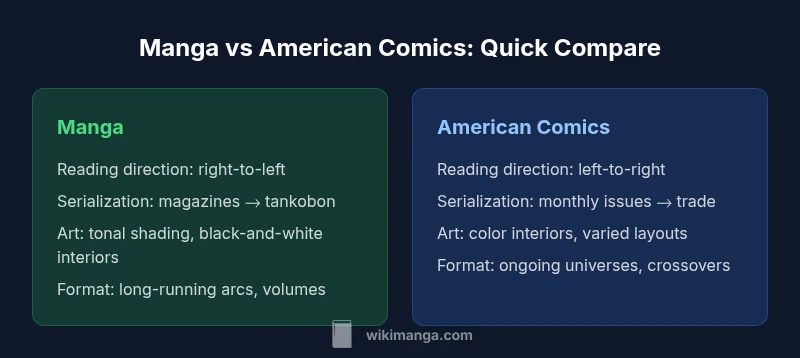
One of the most visible and enduring differences is how pages are read and laid out. Japanese manga is traditionally read from right to left, with panel order guiding the eye across the page in a vertical, forward-moving rhythm. This direction affects how artists compose scenes, how transitions between panels feel, and how readers experience action and emotion. In contrast, American comics are typically read from left to right, with page turns shaping dramatic pauses and beat structure differently. Translations of manga into English or other languages sometimes preserve the original direction, preserving cultural authenticity, while some Western publishers reverse pages to conform to left-to-right reading, which can subtly alter panel relationships. Beyond direction, page design in manga often emphasizes compact storytelling per page, while American comics frequently relies on expansive page layouts to pace multiple subplots within a single issue. These differences matter when studying adaptation, translation, and cross-cultural storytelling.
Serialization and Length
Manga and American comics diverge sharply in how stories are serialized and how long they persist in print. Manga chapters appear first in weekly or monthly magazines, generating a steady stream of chapters that accumulate into longer arcs. After a period of serialization, these chapters are collected into tankobon volumes that make up the core library for readers. This model encourages long-running, evolving narratives and a sense of ongoing commitment from readers. American comics, by contrast, have historically released new issues on a monthly cadence, with occasional interludes such as limited series or one-shots. Story arcs are often contained within a run of issues, and publishers commonly publish trade paperbacks that collect several issues. The result is a different rhythm: manga rewards serial dependence and binge-reads, while American comics optimize for ongoing, event-driven publication with frequent crossovers and reboots. Globalization has created exceptions on both sides, but cadence remains a defining feature.
Artwork, Panel Layouts, and Visual Language
Art in manga tends to prioritize economy, clean line work, and consistent character silhouettes. Panel grids are often tight, with frequent use of speed lines and toning to convey emotion. In many genres, shading and textures are achieved with screen tones rather than color, resulting in a distinct visual language. American comics, by contrast, frequently emphasize dynamic color, varied panel sizes, and cinematic layouts that support action and spectacle. The presence of superhero franchises has driven a culture of large-scale splash pages, dramatic double-page spreads, and editorial-driven world-building. Both traditions celebrate storytelling through visuals, but their tools, pacing, and aesthetic priorities diverge in ways that shape readers’ experiences. For creators, understanding these differences helps tailor work to the intended audience and media.
Audience, Accessibility, and Cultural Context
Readers of manga and American comics come from overlapping yet distinct communities. Manga has traditionally targeted broad age groups in Japan, with a strong concentration of teen and adult readers, and enjoys rapid international distribution via licensed translations. American comics have historically polarized audiences between younger readers of superhero titles and mature readers drawn to independent or alternative titles, with distribution through specialty shops and direct market channels. Accessibility differs: manga often offers steady, uniform release schedules and widely available digital editions, while American comics present a more varied ecosystem that includes weekly single issues, monthly series, and a growing catalog of digital-first titles. Cultural context shapes perception, humor, genre conventions, and how readers engage with characters across borders.
Creators, Production, and Industry Practices
In manga, a strong authorial voice or a small group of creators can drive a long-running title; editors still shape direction but often give more latitude to the original creator. Cultural norms emphasize authorial visions and personal style. American comics frequently rely on collaborative teams: writers, pencilers, inkers, colorists, and editors working in tandem to sustain a shared universe. Corporate publishers, licensing, and branding play a prominent role, which can influence character continuity and cross-title connections. The production timeline is shaped by printing schedules, distribution networks, and market feedback. For aspiring creators, this difference matters: manga offers pathways for singular creators to build a lasting legacy, while American comics presents opportunities to participate in expansive franchises and collaborative workflows.
Market Structure, Distribution, and Global Reach
Manga’s global footprint is reinforced by localized editions, streaming platforms, and a robust licensing ecosystem that makes popular titles accessible worldwide. American comics reach global audiences through translated editions, film and TV adaptations, and a pipeline of tie-in merchandise. The business models differ: manga publishers often prioritize steady cadence and volume-based sales, while American comics emphasize a portfolio of ongoing titles, mainline events, and cross-media promotion. These market structures influence what gets published, how quickly stories appear, and what kinds of genres flourish in different regions. The result is a dynamic, multi-market landscape in which readers can discover both deeply serialized works and franchise-driven storytelling.
Translation, Localization, and Accessibility
Localization is a crucial bridge between these worlds. Manga translations must preserve reading direction, cultural cues, and voice while providing legible typesetting and accurate rights management. Localization teams grapple with onomatopoeia that relies on sound effects unique to Japanese; decisions range from keeping original sound effects to adapting them into the target language. American comics face similar challenges: translating dialog, balancing cultural references, and maintaining the cadence of dialogue to preserve tone. Accessibility features—such as digital editions with adjustable font sizes and guided reading modes—can enhance the experience for both formats. WikiManga. notes that effective localization requires sensitivity to both linguistic nuance and reader expectations in different markets.
Intellectual Property, Universes, and Continuity
Continuity is a central concept in both manga and American comics, but it manifests differently. Manga tends to present self-contained arcs within long-running series, allowing readers to start anywhere along the voyage and still feel a satisfying arc. American comics often leverage shared universes, cross-title events, and reboot cycles that reframe continuity and invite new readers to jump in at entry points. The IP strategies influence licensing, adaptations, and merchandise, and the two ecosystems have different risk tolerances for rebooting or retelling origin stories. Understanding these patterns helps readers and creators anticipate shifts in tone, pacing, and the kinds of stories that are likely to be produced in each space.
Fandom, Community, and Consumer Culture
Communities around manga and American comics cultivate distinct rituals: fan translations, conventions, fan art, and cosplay all flourish in both spaces. Manga’s fandom generally emphasizes long-standing series with devoted fanbases and translations that travel across borders; American comics communities often focus on superhero franchises and cross-media ecosystems. The social dynamics—how fans engage with creators, how fan theories circulate, and how feedback loops influence storytelling—shape not only what is produced but how readers experience the work. For readers who want to explore beyond a single universe, exposure to both worlds offers valuable perspective on narrative pacing, character development, and design choices across cultures.
Practical Guidance for Readers and Creators
If you are a reader deciding where to invest time, start with a target format. For long-form storytelling and cultural nuance, explore manga in serialized form before collecting tankobon editions. If you are a creator seeking collaboration, study how American comics organize teams and plan cross-title events, while appreciating manga's emphasis on authorial voice and consistent art. For aspiring writers and artists, practice storytelling in both reading directions and adapt your panel layouts to the medium. Finally, consider a balanced approach: sample both pathways to cultivate versatility, and use guides like this WikiManga. overview to calibrate expectations when transitioning between formats.
How to Approach Collecting: Which Format to Start With
Collectors should weigh intent: if your aim is to binge through a single world and follow a long arc, manga with its definitive volumes (tankobon) offers a coherent collection. If you enjoy visiting a shared universe with evolving formats, American comics with ongoing series and trade editions provide a broader, franchised experience. Both ecosystems reward patient reading and careful attention to editorial decisions, licensing transparency, and translation quality. Practical tips include checking the index, reading order guides, and comparing editions by edition notes, cover art, and printing quality. This pragmatic approach helps you build a personal library that reflects your tastes.
Common Myths and Misconceptions
Several myths persist about manga and American comics. One common idea is that manga is always superior in depth, which depends on the title and author. Another belief is that all American comics are superhero-driven, when many independent titles explore diverse genres. A third misconception is that translations always preserve exact pacing; in reality, localization choices can alter the reading cadence and cultural understanding. By examining the evidence, readers can appreciate the strengths and limits of each medium without resorting to blanket judgments.
Final Considerations and Next Steps
Both manga and American comics offer distinct, valuable approaches to visual storytelling. The difference between manga and american comics extends beyond panel direction to reading habits, production pipelines, and cultural exchange. The smartest strategy for most readers and creators is to study both traditions, drawing practical lessons from each. The WikiManga. team recommends keeping an open mind: sample diverse titles, study pacing and layout, and consider how translation choices shape your reading experience. By doing so, you’ll build a richer understanding of how manga and American comics contribute to the global comics landscape.