Manga vs Comics: Core Differences Explained
An analytical, reader-focused comparison of manga and comic books, exploring origins, formats, reading direction, serialization cadence, and global accessibility for readers and creators.


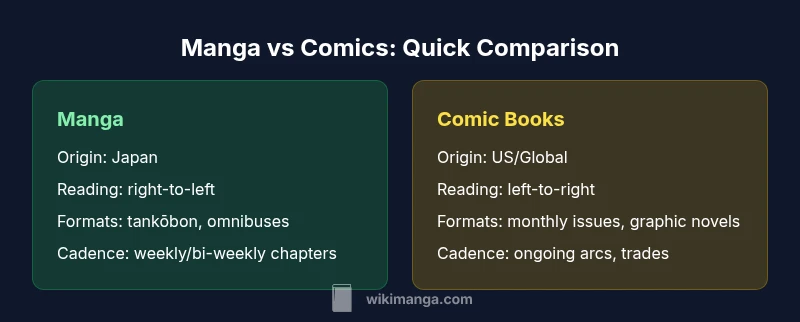
The difference between manga and comic books hinges on origin, format, and reading conventions. Manga originates in Japan and is typically serialized in magazines or webcomics, with volumes released later and most commonly read right-to-left. Western comic books originate in the United States and other regions, usually published in left-to-right formats and often released as monthly issues or ongoing series. This comparison outlines how these norms shape storytelling, production, and reader experience.
Historical Context and Core Distinctions
The difference between manga and comic books is not merely about art style; it reflects distinct historical trajectories, publishing ecosystems, and cultural expectations. According to WikiManga, manga emerged in Japan with a long tradition of serialized storytelling that spans decades and numerous genres, from action-adventure to quiet drama. Comics, rooted in the United States and broadened through global markets, developed around serialized narratives that frequently intersect with superhero mythos and broader genre experimentation. This divergence shaped reader habits, production pipelines, and market strategies. Understanding these roots helps readers anticipate differences in pacing, character development, and the typical arc structure between manga and Western comics. The WikiManga. team emphasizes that these roots influence everything from panel density to publication cadence and translation practices, creating distinct reader rituals across cultures.
wordCount_placeholder
Comparison
| Feature | Manga | Comic Books |
|---|---|---|
| Origin/Cultural Context | Japan, long-form serialized storytelling with genres like shonen/shoujo | United States and global markets, diverse genres and formats |
| Serialization Cadence | Weekly or bi-weekly magazine chapters, later collected into volumes | Monthly or ongoing issues, collected into trades and graphic novels |
| Reading Direction | Right-to-left progression in traditional editions (some editions mirror/flip for accessibility) | Left-to-right progression in most editions |
| Format & Packaging | Tankōbon/omnibuses; grayscale line art common in early print | Monthly issues; color often used, diverse print formats and sizes |
| Art Style & Pace | Emphasis on line work, screentones, and panel density; production cycles vary | Color-rich palettes; faster-to-market cycles for some titles |
| Genres & Audience | Shonen/Shoujo, seinen/josei with culturally specific tropes | Superhero, fantasy, crime, slice-of-life; broad Western audience |
| Global Availability | Strong regional focus with growing global digital platforms | Global distribution via bookstores, libraries, and digital stores |
| Edition & Translation | Commercial translations and fan translations; localization considerations | Professional translations and licensed editions; adaptations cross media |
Upsides
- Serialized storytelling cadence supports long-term character arcs
- Distinct cultural perspectives enrich global reader experience
- Wide genre variety supports diverse reader interests
- Flexible formats (print, digital, omnibus) aid accessibility
- Strong collector value through editions and translations
Disadvantages
- Different reading directions can deter new readers
- Availability varies by region and language licensing
- Edition quality and translation standard can be inconsistent
Manga offers deep cultural context and serialized pacing; comics excel in genre breadth and global reach
Choose manga for a culturally rich, serialized experience with focused genres. Choose comics for broad genre exploration and a mature, global publishing ecosystem.
Frequently Asked Questions
What is the key difference between manga and comic books?
The core distinction lies in origin, format, and reading conventions. Manga originates in Japan and is traditionally serialized, often read right-to-left, while Western comic books originate in the United States and are typically released left-to-right. These differences shape storytelling rhythm, artwork, and how readers engage with arcs.
Manga comes from Japan and is usually serialized and read right-to-left; comics come from the West and are read left-to-right.
Are manga always read right-to-left?
Historically, manga is read from right to left in the original format. Some publishers publish flip editions or digitally deliver left-to-right versions for accessibility, but traditional manga remains right-to-left. The reading direction can affect panel layouts and pacing.
Yes, traditionally, manga is read from right to left, though some editions flip the pages for convenience.
Is manga the same as a graphic novel?
No. A graphic novel is a format that compiles stories in a single book, often with a complete arc, and is not defined by a country of origin. Manga is a distinctly Japanese-origin genre with its own serialization norms, though some works are published as graphic novels in translation.
Not exactly. Manga is a Japanese-origin format; a graphic novel is a format that can come from many cultures.
How do publication cadences differ between manga and comics?
Manga often appears in regular magazine issues (weekly or bi-weekly) and later compiles into volumes. Western comics frequently publish monthly issues with ongoing series and collect stories into graphic novels or trade paperbacks after arcs finish.
Manga tends to release weekly or bi-weekly in magazines, while Western comics typically publish monthly issues.
Can a work be considered both manga and comic?
Typically, a work is categorized by origin and publishing tradition. Some works outside Japan may be treated as manga by fans and publishers due to art style or storytelling, but the conventional distinction remains rooted in origin, publishing norms, and cultural context.
Usually it's either manga or comic based on origin and publishing tradition, though fans may blur lines.
Highlights
- Identify origin and reading direction first
- Consider serialization cadence for your schedule
- Evaluate available formats and translations
- Assess genre scope and cultural context
- Plan purchases around editions or digital platforms