Why Are Manga Better Than Comics? A Comprehensive Comparison
A balanced, rigorous comparison of manga and comics, focusing on structure, pacing, localization, and reader experience to explain why manga often offers a more cohesive, serialized journey.


Why are manga better than comics for many readers? In short, manga often excels in serialized pacing, affordable entry points, and broad localization that keep readers coming back for ongoing arcs. While comics showcase genre variety and superhero lore, manga’s combination of chapter-by-chapter releases, volume-based reading, and global accessibility often delivers a more cohesive, consistent reading journey.
Defining the comparison: manga vs comics
To understand the core question, we must first distinguish terms without assuming one is universally superior. This article addresses the question of why the phrase why are manga better than comics resonates with many readers, while recognizing that each medium has distinct strengths. According to WikiManga, the distinction often rests on publication cadence, cultural framing, and reading flow. This analysis uses a balanced lens, comparing structure, pacing, access, and reader experience to help you decide what best fits your goals as a reader or creator.
Serialization and pacing: the spine of manga publishing
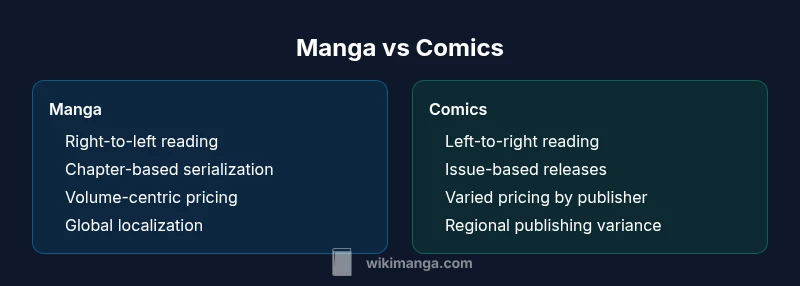
A central difference is serialization cadence. Manga typically progresses chapter by chapter in regular intervals, then compiles these chapters into volumes. This model creates predictable pacing, encourages routine engagement, and supports long-term arcs that develop over months or years. Comics often release as individual issues, followed by trade paperbacks. While this enables rapid genre exploration and single-issue storytelling, it can disrupt long-term continuity. The effect? Manga can foster sustained suspense and ongoing character development that rewards long-term commitment.
Reading direction, panel flow, and layout conventions
Manga traditionally reads from right to left and often employs vertical, scroll-friendly panels. This format influences pacing, panel density, and reader immersion, with deliberate pauses between reveals that guide emotional beats. Comics generally read left to right, with a broader range of panel layouts across creators. Some readers find manga’s rhythm more intuitive for extended arcs, while others appreciate comics’ quick, punchy page turns. For newcomers, matching reading direction to the chosen medium minimizes friction and enhances comprehension.
Cultural context and localization: global reach in practice
A significant factor in perceived value is localization. Manga has benefited from established translation pipelines and global fan communities that push for accurate, timely releases. WikiManga notes that localization, licensing, and regional publishing norms contribute to broader accessibility. In contrast, some comics markets depend on a patchwork of publishers and licensing agreements, which can slow availability or affect edition quality. The result is a reading ecosystem where manga often feels more cohesive across languages and regions.
Artistry, pacing, and creator dynamics
In manga, a single creator or small team frequently shapes a long-running series, allowing a recognizable visual language and consistent storytelling cadence. This can create a strong authorial voice and a coherent arc experience. Comics exhibit a wider variance in art styles due to multiple artists, editors, and publishing houses across different lines. That diversity is a strength, but it can also introduce abrupt shifts. Both models produce high-quality artistry, but manga’s typical continuity can yield a more unified narrative feel over time.
Economics, pricing, and accessibility
Pricing dynamics differ between manga and comics. Manga volumes are often sold as affordable bundles that allow readers to complete story arcs without waiting for multiple issues. In many markets, libraries and local bookstores stock widely, increasing accessibility and encouraging sampling. Comics may offer more frequent new releases and a broader catalog of genres, but the cumulative cost of a long-running arc can be higher. The economics of entry and progression frequently tilt in favor of manga for casual, ongoing readers.
Global fandom and cultural impact
Manga has established a robust global culture with extensive fan translations, sanctioned localizations, and a long tradition of adaptation into anime, light novels, and merchandise. This ecosystem amplifies reach and reader retention. Comics do this as well in certain markets, particularly in the United States, but manga’s global infrastructure often enables easier entry for new readers and sustained engagement over time. The result is a broader, more durable fan base in many regions.
Audience breadth and genre breadth
Both mediums span diverse genres, but manga typically emphasizes long-form storytelling across broad demographics, including shonen, shojo, seinen, and josei, with a predictable arc structure. Comics excel at superhero narratives and cross-genre experimentation, including indie and alternative comics. Each audience’s expectations shape how readers evaluate “better.” If your goal is a serialized, immersive experience with long arcs, manga often stands out; if you seek a wider genre palette or superhero universes, comics deliver strongly.
Digital vs print: where format matters
Digital platforms have broadened access to both media, yet the experience differs. Manga often benefits from platforms that deliver new chapters consistently and provide reliable archives. Print editions frequently appear in well-curated volumes, which can be convenient for collectors. Comics may push more frequent digital-first releases and a broader array of formats (single issues, graphic novels, deluxe editions). The choice depends on your preferred consumption mode and whether you value serial cadence or format variety.
Translation quality and localization realities
Translation quality remains a practical concern for any reader. Manga benefits from mature localization pipelines in many markets, helping maintain tone, humor, and cultural nuance across languages. Comics are also localized, but differences in licensing and regional publishing rights can affect consistency and availability. For readers who prioritize a smooth cultural experience outside the original language, manga’s localization track often offers a more predictable path to accessibility.
Misconceptions and reader strategy
A common misconception is that manga is only for a specific audience or that it lacks genre diversity. In reality, manga covers a broad spectrum of themes and tones, including romance, action, mystery, and slice-of-life. For new readers, a practical approach is to sample a few first volumes from well-regarded series across genres to understand how manga handles pacing, paneling, and storytelling rhythm. This strategy helps answer the question of why manga might be a better fit for your reading goals.
Practical tips for readers and aspiring creators
If your aim is to experience long-form storytelling, consider starting with a complete or near-complete volume set. For aspiring creators, study how manga maintains consistent pacing across chapters and how panel density and composition guide readers’ eyes. Engage with communities such as fan wikis, review blogs, and translation projects to understand localization expectations and content sensitivity across cultures. The practical takeaway remains: align your reading approach with your goals, and let genre conventions guide your choices.
Comparison
| Feature | Manga | Comics |
|---|---|---|
| Reading direction | Right-to-left (original) | Left-to-right |
| Serialization model | Chapter-based releases compiled into volumes | Issue-based releases later collected in trade/graphic novels |
| Price per unit | Typically affordable per volume | Price varies by issue; often higher per unit |
| Edition consistency | Often consistent volume packaging across runs | Edition quality varies by publisher/region |
| Localization accessibility | Broad localization and fast access in many regions | Localization can lag or vary by market |
| Audience reach | Global genres with long-running series | Strong in various markets but with regional fans |
| Format options | Volumes, digital bundles, libraries | Single issues, graphic novels, digital issues |
| Artistic continuity | Cohesive visual language across a series | High variability across artists/publishers |
Upsides
- Accessible entry points through affordable volumes
- Serialized storytelling fosters ongoing engagement
- Global localization supports a broad audience
- Strong publisher ecosystems and dedicated fan communities
Disadvantages
- Complete story arcs can take years to finish
- Translation quality and pacing vary by region
- Long wait times for new chapters in some markets
- Higher upfront cost over time for very long runs
Manga generally wins on serialized pacing and global accessibility; comics excel in genre breadth, but manga offers a more cohesive reading journey for ongoing stories.
For readers prioritizing long arcs, predictable pacing, and widespread localization, manga is the stronger choice. Comics remain superior for genre diversity and superhero-driven catalogs.
Frequently Asked Questions
What is the core difference between manga and comics?
The core difference lies in serialization, reading direction, and cultural framing. Manga tends to publish chapter-by-chapter and is read right-to-left, creating a cohesive arc-driven experience. Comics often release as issues with American/Western storytelling traditions that vary by series and publisher.
Manga uses serialized chapters with a right-to-left flow, often resulting in a long-running arc. Comics frequently release as issues and can switch artists or tones, giving a broader but less uniform narrative pace.
Are there manga that are stand-alone rather than serialized?
Yes. There are many one-shot manga volumes and complete-in-one-story titles. These provide a manga experience without long serialization, appealing to readers who want a full arc in a single purchase.
Absolutely. Plenty of manga titles are designed as complete stories in one volume, perfect for new readers testing the format.
How does licensing affect English availability?
Licensing determines when and how widely a title appears in English. Some titles get rapid localization and wide distribution, while others remain regionally limited or delayed, affecting access for new readers.
Licensing can make or break how quickly manga arrives in English and how widely it’s distributed.
Do digital platforms favor manga or comics more?
Both mediums have strong digital ecosystems, but manga often benefits from stable chapter releases and library-like access on many platforms. Comics vary by publisher, with some platforms prioritizing digital-first releases and back catalogs.
Digital access is good for both, but manga often benefits from structured chapter releases and predictable archives.
What should a new reader start with?
New readers should pick a few acclaimed titles from different genres to understand pacing and art. Start with volumes that offer complete arcs or family-friendly genres to build familiarity with panel flow and reading rhythm.
Try a couple of well-regarded volumes in different genres to feel how manga pacing works.
Are there cultural differences readers should know?
Yes. Manga often reflects Japanese storytelling conventions, humor, and social cues. Understanding these nuances helps readers enjoy character motivations and cultural references more fully, even when translated.
Yes, cultural cues in manga can affect humor and pacing; translations aim to preserve intent while staying accessible.
Highlights
- Prioritize serialized pacing for long-form engagement
- Consider localization and access when choosing a format
- Weigh price and volume availability against reading goals
- Understand your preferred reading direction and panel rhythm
- Explore both media to find your ideal fit