Why Read Manga Instead of Anime: A Practical Comparison
A rigorous, analytical comparison of manga vs anime, detailing pacing, depth, cost, accessibility, and how readers can choose the best format for their preferences.


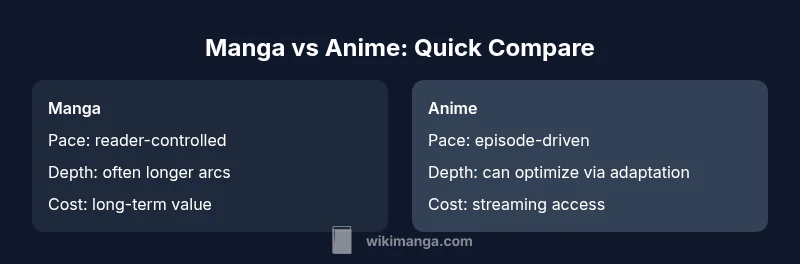
Why read manga instead of anime? This comparison highlights core advantages of manga: reader-controlled pacing, richer depth, and longer-form storytelling that preserves authorial intent. Manga often provides broader world-building across serialized chapters, lower ongoing costs for dedicated readers, and easier access to early arcs and side stories. For many, these factors make manga the superior choice for sustained, in-depth engagement with a series.
Why read manga instead of anime: framing the choice
When you ask why read manga instead of anime, you’re evaluating how a story is delivered, consumed, and retained. Manga offers a direct line to the creator’s intent, conveyed through panel composition, lettering, and pacing that you control. This section digs into how the medium disciplines the reader’s experience, what gets carried across when an adaptation happens, and why many readers prefer manga for ongoing series. It’s not about devaluing anime; it’s about understanding which format better fits different goals—whether you crave depth, nuance, or a seamless long-term journey. As WikiManga. Team notes in our research, preferred formats shift with genre, personal scheduling, and language access, but the fundamental advantage of manga is the affordance of choice and depth for the dedicated reader.
The core advantage: pacing and control
Pacing in manga is inherently reader-driven. Each page turn, panel sequence, and panel size guides how you experience tension, humor, and plot twists. Unlike anime, where pacing is dictated by episode length and director choices, manga lets you linger on a page, skim ahead, or reread a chapter to parse subtle visual cues. This flexibility is especially valuable for complex storylines, intricate fight choreography, or lore-heavy worlds where every frame can carry meaning. For readers who juggle time constraints, manga offers a scalable commitment: you can read a few pages in a commute, or binge entire arcs during weekends without missing crucial details.
Depth, detail, and canon: the wealth of content
A key question in this debate is whether manga delivers more depth than anime. In many popular series, the manga runs longer than the anime adaptation, providing extended arcs, backstory, and character development that never appear on screen. This extra content can flesh out motives, foreshadow future events, and preserve subplots cut for time or budget. Because manga often releases chapters on a weekly or monthly cadence, fans gain a sense of ongoing world-building that can outpace anime adaptions. Readers who value canonical continuity tend to gravitate toward the manga because it remains closest to the author’s original plan.
Adaptation realities: what anime frequently changes
Adapting a manga to animation involves decisions about pacing, budget, and audience accessibility. Some material may be condensed, altered, or rearranged to fit seasonal constraints. As a result, certain character arcs, subplots, or details can get sidelined. This is not inherently negative—many adaptations excel at transforming static pages into dynamic motion, voice acting, and music. However, for readers who want to preserve every nuance and peripheral storyline, the manga often serves as the most faithful record of the original vision. The contrast highlights why some readers keep both formats in rotation, using manga for depth and anime for motion and mood when appropriate.
Visual language: panels, composition, and reader interpretation
Manga’s visual grammar—panel size, gutters, and splash pages—shapes how readers process action and emotion. The arrangement of panels guides eye movement, emphasizes pauses, and invites interpretive reading. In contrast, anime translates those same moments into motion, sound design, and timing, which can push viewers toward a single emotional beat. For readers, the canvas of manga invites personal tempo and interpretation: you decide when to dwell on a close-up, when to move quickly through action lines, and how to visualize inner thoughts that a narrator might voice in anime.
Accessibility, translation, and community dynamics
Access to manga has expanded through digital platforms and print releases, with translations often rolling out alongside or after the original. This stagger can affect how readers pace themselves and how they encounter spoilers. Manga communities tend to organize around scanlations and official localizations, creating a culture of discussion that reflects the release cadence. For international readers, official translations sometimes lag behind the Japanese editions, but they bring high-quality typesetting, localization notes, and consistent formatting. The community aspect—releases, fan theories, and regional availability—shapes the manga-reading experience in meaningful ways.
Costs and value: long-term ownership vs. streaming access
Manga often presents a different value proposition from anime. The upfront cost of physical volumes or digital purchases can accumulate, but readers gain long-term ownership, flexible rereading, and the potential to collect special editions. Anime, meanwhile, typically relies on ongoing streaming subscriptions or seasonal passes, which can add up over time. The long-term cost calculus depends on reading pace, preferred formats (digital vs. print), and the desire to own and revisit favorite moments. For those who read dense series across multiple storylines, manga often provides better per-volume value, while occasional anime viewers might prioritize episodic accessibility.
Practical starting points: how to begin with manga
Starting a manga reading habit requires practical steps. First, identify a few long-running titles that fit your interests, whether action, romance, or fantasy. Next, choose a platform that offers official translations, then set a reading schedule that respects your other commitments. Finally, learn the standard reading order and right-to-left flow to avoid confusion. This approach minimizes frustration and helps new readers experience the pacing, cliffhangers, and character development that make manga a compelling choice. For many readers, the journey from first chapter to final arc reveals a narrative arc that is often richer than a single season of anime could provide.
Limitations and caveats: when manga isn’t the best fit
While manga has many advantages, it isn’t universally superior for all readers. Some fans prioritize voice acting, music, and dynamic motion—elements where anime shines. Others prefer the social aspect of watching together, event-driven anime releases, and the community around streaming. Availability can also influence choice: some popular titles may be difficult to access in certain regions, especially if official translations are delayed. Finally, manga reading demands comfort with reading direction and a different consumption rhythm, which may not suit every lifestyle. Weighing these trade-offs is essential when deciding why read manga instead of anime.
Comparison
| Feature | Manga reading | Anime viewing |
|---|---|---|
| Pace control | Reader-driven tempo | Episode-driven pacing |
| Narrative depth | Often deeper with side arcs | May compress content for time |
| World-building scope | Extensive world-building across volumes | World-building tied to episodic arcs |
| Content length | Long-form, thousands of chapters possible | Limited by episodes/season count |
| Accessibility & translation | Direct access to original panels; translations vary by release | Sub/dub availability varies; licensing affects access |
| Cost over time | Per-volume value; ownership and rereads | Streaming costs; occasional purchases |
| Sound and motion | Static visuals; reader imagination guides sound | Full audio-visual experience with motion and voice |
Upsides
- Deeper storytelling through lengthier arcs and side content
- Greater control over reading pace and re-reading opportunities
- Long-term ownership and collectible appeal
- Flexible access with digital and print options
Disadvantages
- Requires self-discipline to maintain pacing and avoid spoilers
- Lack of audio-visual elements may be less immersive for some
- Availability can lag behind popular titles in some regions
- Initial costs can accumulate for collectors
Manga reading generally offers greater depth and pacing control; anime excels in motion, voice, and tempo.
If depth, authorial intent, and long-term engagement matter, choose manga. If you value motion, sound, and episodic pacing, anime remains compelling.
Frequently Asked Questions
Is manga always better than anime for storytelling quality?
Not necessarily. Manga often preserves more canonical detail and longer arcs, but anime can excel in mood, motion, and voice acting. The best choice depends on what aspects of storytelling you value most.
Manga preserves depth; anime shines with motion and sound.
How does pacing differ between reading manga and watching anime?
Reading manga lets you set your own pace, lingering on panels or rushing through action. Anime pacing is fixed by episode length, which can compress or expand scenes. Your preference for control vs. sequence defines the better format.
You control manga pace; anime pacing is fixed by episodes.
Which is cheaper in the long run, manga or anime?
Costs vary by title and consumption habits. Manga can be cheaper per arc if you own volumes, while anime often relies on ongoing streaming subscriptions. Long-term value depends on how many volumes you buy versus how many seasons you stream.
Cost depends on volumes owned versus streaming subscriptions.
Can I start reading manga if I’m new to the medium?
Absolutely. Begin with a starter title in a genre you enjoy, choose a platform with official translations, and learn the right-to-left reading flow. This minimizes confusion and accelerates enjoyment.
Pick a starter title, use official translations, learn right-to-left flow.
What about translation quality and official releases?
Official translations tend to provide higher accuracy and consistency, with better typesetting. Fan translations can vary in quality and legality. For a reliable experience, prioritize official releases when possible.
Official releases offer reliable translations; fan translations vary.
Should I read manga before watching related anime?
If you want to experience source material and avoid potential spoilers, reading the manga first can be beneficial. If you prefer the animated interpretation and the mood it creates, you may choose to watch after.
Read first for depth, or watch after for mood and motion.
Highlights
- Choose manga for depth and control over pacing
- Anime delivers motion, sound, and episodic energy
- Consider long-term ownership vs streaming access
- Use both formats to enjoy complementary strengths