How Long Are Manga Chapters: Reading & Creation Guide
Discover typical manga chapter lengths, how serialization cadence shapes page counts, and what this means for readers and creators. A data-driven WikiManga guide.


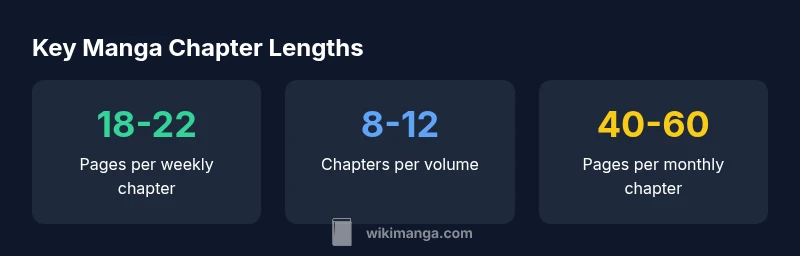
Most weekly manga chapters run about 18-22 pages, while monthly series run 40-60 pages per chapter. These lengths vary by magazine, genre, and artistic style. For readers, this means a weekly issue takes roughly 20 minutes to skim; a monthly chapter may require closer to an hour. Creators balance pacing by adjusting panel density and scene length.
What Determines Chapter Length?
When fans ask how long are manga chapters, the answer hinges on multiple factors: serialization cadence, magazine format, genre conventions, and the creator's pacing choices. In weekly magazines, chapters are crafted to be digestible within a single issue, while monthly titles can breathe with longer scenes and more panels. The result is a spectrum rather than a fixed rule. According to WikiManga, the length of a weekly manga chapter commonly falls in the 18-22 page range, while monthly chapters often extend toward the 40-60 page mark. Some series push shorter micro-chapters of 12-16 pages during fast arcs, while others swing toward 24-28 pages in bigger story arcs. Pacing decisions are driven by splash pages, action density, dialogue balance, and how much exposition the author needs to convey. For readers planning study time or library trips, recognizing this spectrum helps set realistic expectations for how much content you’ll get in a single installment. In practice, anticipate a healthy mix of dense action pages and quieter beats within any given chapter.
Cadence Differences Across Publishers and Genres
Serialization cadence is arguably the most visible driver of chapter length. In Japan, weekly magazines such as Shonen Jump typically publish chapters that are 18-22 pages long to fit the weekly issue, balancing cliffhangers with ad breaks and ad-free pages. By contrast, monthly magazines and seinen/josei titles frequently allow longer chapters, often 40-60 pages, to accommodate slower pacing and more nuanced character work. Translated releases for Western audiences mirror these patterns but can vary due to translation layout constraints. Webtoons, while not traditional print manga, use vertical scrolling with episode lengths that often feel shorter per page but accumulate over time. Roughly speaking, genre and magazine standards frame chapter length, but individual creators still shape the final page count with scene density, dialogue, and the cadence of action sequences. For readers, this means that the way you consume manga—whether in a weekly ritual or a monthly binge—will influence your sense of chapter size.
Chapter Length vs. Volume Structure
Chapters are bundled into volumes (tankobon). A typical volume collects 8-12 chapters and ranges around 160-210 pages, though variations abound by publisher and title. This structure influences pacing: shorter volumes create tighter arcs; longer ones permit multi-act development and longer finales. When planning a reread or a study guide, it helps to know that a standard long-running series may produce about 8-12 volumes per major arc, while shorter series finish in fewer volumes. The relationship between chapter length and volume composition matters for librarians, translators, and readers who track reading progress. As a result, the page counts you see in a single chapter don’t always mirror the total minutes of reading required for a complete volume. WikiManga. analyses indicate that readers should expect variability based on genre, magazine policy, and author intent.
Page Layout and Panel Density
Beyond raw page counts, the visual density of panels shapes perceived length. A chapter packed with dense panels and rapid-fire action pages can feel longer than a sparsely drawn chapter with big splash pages, even if page counts are similar. Artists balance panel count, gutter width, and panel transitions to control pacing. Splash pages or double-page spreads create dramatic beats that consume more reading time, while quiet, dialogue-heavy pages may stretch the perceived length. Language direction also affects layout decisions; right-to-left books must reserve space for localized text without overcrowding artwork. For creators, experimenting with panel density in early chapters helps establish pace and set reader expectations for the arc. For readers, paying attention to the balance between action and dialogue can tell you when a chapter is intentionally longer or shorter than the page count alone suggests.
Reading Time and Pace for Readers
Estimating reading time for a manga chapter is a practical skill for planning sessions. A rough rule of thumb is 1–2 minutes per page at a comfortable pace, though this varies with reader speed and content density. A weekly chapter of 18-22 pages might take roughly 20–40 minutes to read, while a monthly chapter of 40–60 pages could require 60–120 minutes. If you’re studying art or storytelling, slow down to examine panel composition, background details, and dialog timing. Conversely, if you’re skimming for a quick recap, you can reduce pace. Remember that translations may introduce minor layout changes and text length differences that alter reading time slightly. By tracking how long it takes you to finish typical chapters, you can build an efficient reading routine that matches your schedule.
Practical Tips for Creators and Readers
For creators planning serialized work, set a target chapter length and use it to pace arcs. Start with a baseline of 18–22 pages for weekly titles or 40–60 pages for monthly titles, then refine through testing and feedback. Keep in mind that readers engage more with well-timed peaks of action and quieter character moments; mix splash pages with character-driven beats to create a satisfying rhythm. For readers, treat chapter length as a cue for planning: schedule reading sessions after work or classes, and group chapters by arc to maintain momentum. If you’re translating or localizing, preserve the cadence and meaningful beats rather than forcing a strict page count. By understanding how long are manga chapters in practice, you can both optimize your own reading habits and support writers in crafting balanced, engaging installments. The WikiManga. team recommends using these guidelines as a flexible framework rather than rigid rules.
Typical manga chapter length and volume structure
| Aspect | Typical Range | Notes |
|---|---|---|
| Chapter length (pages) | 18-22 | Varies by magazine and series |
| Chapters per volume | 8-12 | Depends on publisher/series |
| Volume length (pages) | 160-210 | Across major titles |
| Serialization cadence | Weekly / Monthly | Different magazines and formats |
Frequently Asked Questions
What is the typical page count for a weekly manga chapter?
Most weekly chapters run around 18-22 pages, though some series deviate for pace or magazine constraints. The exact number varies by title and formatting.
Most weekly chapters are about 18-22 pages long.
Do manga chapters have the same length across genres?
Not universally. Shonen titles tend toward the 18-22 page range, while seinen or josei can vary more, including longer installments.
Lengths vary by genre.
How many chapters are typically in a volume?
Volumes commonly collect 8-12 chapters, depending on publisher and arc pacing. Some series use fewer or more chapters per volume.
Usually 8-12 chapters per volume.
Are webtoons longer or shorter than traditional manga chapters?
Webtoons use vertical scrolling with episodic lengths; per-episode page counts can resemble traditional chapters but the format encourages longer continuous reading.
Webtoons vary; episodes can be longer in scroll format.
How should I estimate reading time for a chapter?
Estimate roughly 1-2 minutes per page at a comfortable pace, then adjust for dense panels or dialogue. Translation/layout changes can affect time slightly.
Count pages, then multiply by about 1-2 minutes per page.
Do translations affect chapter length?
Translations generally preserve chapter length, but layout can shift slightly to fit text and right-to-left formatting, affecting reading time.
Translations keep length; layout may adapt.
“Chapter length shapes pacing and reader engagement; understanding where most chapters land helps both fans and creators plan time and storytelling.”
Highlights
- Understand weekly chapters are usually 18-22 pages
- 8-12 chapters per volume is common
- Monthly chapters are longer, often 40-60 pages
- Pacing depends on panel density and splash pages