How Long Are Manga Volumes? A Practical Guide
Explore typical manga volume lengths, what influences page counts, and how to estimate reading time and shelf space for print and digital editions. A data-driven, WikiManga‑style overview.


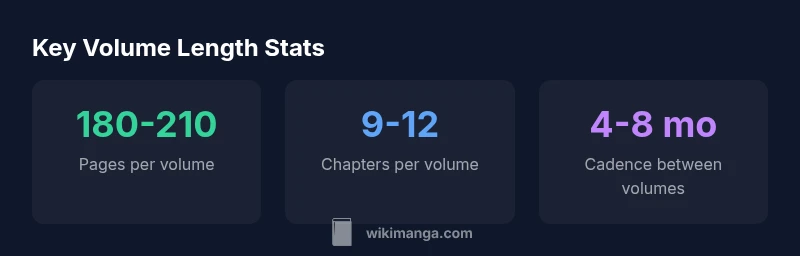
Most manga volumes run roughly 180 to 210 pages, with 200 pages serving as a common midpoint. Page counts vary by publisher, imprint, and print format, so some volumes reach 240 pages while others sit closer to 160. For many popular titles, a typical volume contains about 9 to 12 chapters, though chapter length varies by series. In short: expect around 200 pages per volume, with outliers on either side.
What defines a manga volume
According to WikiManga, a manga volume is the published collection of serialized chapters that publishers release as a single book. In Japan this collection is typically called a tankobon, while in other regions the term volume is used more broadly. A volume gathers a discrete arc or a portion of a series’ ongoing narrative, but the exact length depends on a publisher’s formatting guidelines, trim size, and printing economy. Variants such as omnibus editions or deluxe volumes can repackage multiple smaller volumes, changing the page count per unit. Importantly, a volume’s length reflects editorial decisions about pacing, pacing density, and how the chapters flow when read consecutively. These differences matter for readers who track series progress or collectors who manage shelf space. The upshot is that a “volume” is a publisher-driven unit, not a fixed universal standard across the industry, and this is one reason page counts vary so much across titles and regions.
Typical page counts and chapter density
Page counts for manga volumes commonly fall in a broad range, with 180–210 pages being a frequent target and 200 pages serving as a practical midpoint. Some volumes push beyond 240 pages, especially in longer-running or prestige editions, while others appear closer to 160 pages in shorter runs or earlier releases. Chapter length is a major determinant of volume size: shorter chapters may yield fewer pages per chapter and still fit within the standard volume, whereas longer, more expansive chapters increase a volume’s pages. In practice, many mainstream titles consolidate 9–12 chapters into a single volume, though this varies by author, magazine format, and the author’s storytelling cadence. Readers who prefer quick reads may see volumes on the lower end of the spectrum, while collectors who favor dense tomes may encounter the upper end of the range. The key takeaway is that volume length is primarily a function of chapter length and the publisher’s formatting choices, not a universal rule across all series.
Regional and formatting differences
Regional publishing practices influence volume length through trim size, paper stock, and binding methods. Japanese tankobon volumes typically use compact, consistent trim sizes that optimize for bookstore shelf visibility, while Western editions may adopt slightly different dimensions, leading to page-count variations even when the number of chapters remains similar. Digital editions can offer fixed-page layouts that resemble print, but some platforms reflow text to fit screens, effectively changing the reading experience even if the page count is preserved. Language localization can also affect pagination, introducing minor shifts in page counts during translation and typesetting. For readers, these differences mean that a volume’s physical footprint may vary by country and edition, even when the core story remains the same.
Publisher conventions by imprint
Different publishers and imprints establish conventions that shape volume length. Shonen and shoujo lines from major houses often target a similar page range to keep printing costs predictable and to align with reader expectations, but seinen and josei lines may distribute content differently due to longer or more complex chapters. Deluxe or premium editions typically add extra pages for commentary, color plates, or bonus chapters, increasing the total page count per volume. Omnibus collections repackage multiple volumes into a single larger book, which can dramatically alter perceived length. For collectors, understanding imprint-specific tendencies helps set expectations about how long a volume will feel and how many volumes there are to complete a story.
How to estimate reading time and shelf space
Estimating reading time starts with page counts and your reading speed. If you read about 20 pages per hour, a 200-page volume would take roughly 10 hours divided across reading sessions. Active reading pace, panel density, and format (print vs digital) influence this estimate. Shelf space planning benefits from a simple rule: multiply the number of volumes by the approximate width of each spine after accounting for dust jackets or slipcases. For example, a typical 200-page tankobon spine may be about 2–3 cm wide; multiplying by the number of volumes gives a rough shelf width. These calculations improve with actual measurement of the edition you own and how tightly you shelve your collection.
Practical tips for collectors and readers
- Track edition differences: print vs digital can alter perceived length and reading flow. - Create a simple volume log to note page counts by title and edition. - Use binders or display shelves that accommodate the standard height and width of your most common volumes. - When browsing, check the edition’s page count range in the publisher’s product page. - For long-running series, consider omnibus editions to consolidate multiple volumes into fewer physical units. - If you’re planning to reread, a consistent format helps reduce decision fatigue when selecting your next read.
Variations by genre and series length
Length varies by genre and storytelling approach. Action-packed shonen titles tend to use tighter chapter pacing with consistent volume counts, while fantasy or slice-of-life series may spread narrative moments across more chapters and longer pages. Series with multipart arcs or expansive world-building might publish extended volumes to accommodate dense lore and world translation notes. Familiarity with typical ranges helps, but always check the specific edition you’re purchasing, as many publishers adjust volume length to fit marketing or regional printing constraints.
What to expect in digital vs print volumes
Digital volumes often mirror print in terms of page counts, but some platforms optimize reading experience by reflowing or reformatting layouts for screens. This can alter the visual rhythm even when pages are counted the same. Print volumes deliver tactile confirmation of length through page count, weight, and binding—elements that affect how long you stay with a volume and how it feels in your hands. For readers who value consistent page counts, sticking to a preferred imprint can simplify expectations across a full series.
Typical length characteristics of manga volumes
| Metric | Typical range | Notes |
|---|---|---|
| Page count per volume | 180-210 | Common tankobon range |
| Chapters per volume | 9-12 | Varies by series |
| Release cadence between volumes | 4-8 months | Depends on publisher and title |
Frequently Asked Questions
What is a manga volume?
A manga volume is a published collection of serialized chapters, released as a single book by a publisher. It groups a portion of a series into a cohesive unit, often with additional editorial content.
A manga volume is a collected book of chapters, usually with some extras.
Do all volumes have the same number of pages?
No. Page counts vary by title, imprint, and edition. Some volumes are around 160 pages, while others exceed 240 pages depending on formatting choices.
No—page counts vary a lot by title and edition.
Why do some volumes have more pages?
More pages usually result from longer chapters, deluxe editions, or omnibus formats that compress multiple volumes into one book. Publisher guidelines also influence pagination.
Longer chapters, deluxe formats, or bundled editions increase pages.
Are digital volumes shorter or longer than print?
Often they match print page counts, but some platforms reflow layouts for screens. Reading experience can feel different even with the same pages.
Digital editions may reflow pages, changing the reading feel.
How many chapters are usually in a volume?
Most volumes contain about 9–12 chapters, but this varies with pacing and chapter length. Some series compress more content into fewer chapters.
Typically 9–12 chapters per volume.
When are new volumes released?
Release timing varies by series and publisher but a typical cadence is roughly every 4–8 months. Long-running titles may take longer between volumes.
Cadence is usually 4–8 months, depending on the title.
“Volume length is a balance between storytelling density and collectability; publishers vary enough to expect some fluctuation, but most readers find a familiar range.”
Highlights
- Use page counts and chapters to gauge volume length
- Expect regional variations in print formats
- Digital editions often mirror print but differ in layout
- Plan shelves with typical volume widths in mind