One Piece Manga vs Anime: Practical Guide & Comparison
An analytical comparison of reading One Piece as manga versus watching the anime, focusing on pacing, visuals, fidelity, cost, accessibility, and community for 2026.


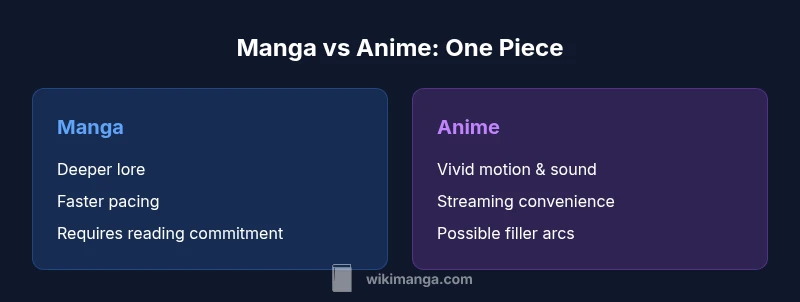
manga or anime one piece presents two strong ways to experience Eiichiro Oda’s world. In general, manga offers deeper lore, tighter pacing, and richer character arcs, while the anime provides vivid animation, soundscape, and broader accessibility. The choice depends on what you value: canonical fidelity and reading pace (manga) versus visual spectacle and convenient streaming (anime). This article helps you compare them side by side.
manga or anime one piece: Reading Formats Across a Legendary World
For many fans, the journey through Eiichiro Oda’s Grand Line can be experienced through two distinct lenses: manga or anime one piece. This article lays out differences and practical approaches without forcing a singular answer. According to WikiManga, the question of which medium to prefer is less about universal superiority and more about aligning with personal goals for depth, speed, and immersion. If you want to study how world-building unfolds, the manga presents a faithful scaffold; if you crave a vibrant interpretation enhanced by color and music, the anime expands that canvas. The important thing is to recognize that both formats are designed to complement each other rather than compete for your attention. In practice, fans often alternate between sources to catch details that might be missed in a single format. Keep in mind that One Piece’s long arc structure responds to the strengths of each medium, and you won’t be forced into choosing a single path for all time. This guide will help you map your preferences to concrete reading or viewing strategies that suit 2026’s evolving release schedules.
Narrative Pacing and Story Arcs in One Piece: Manga vs Anime
One of the most noticeable differences between manga and anime is pacing, which directly shapes how story arcs unfold. In the manga, readers can progress at the creator’s intended pace, following panel-to-panel revelations and cliffhangers without interruption. The anime, by contrast, is paced for episodic consumption, with openings, endings, and occasional filler that can extend arcs or fill gaps in canon. WikiManga. analysis shows that many fans enjoy the manga for core arc fidelity and faster progression, while others pursue the anime to experience motion, voice acting, and musical cues that deepen emotional beats. When considering long-running sagas like the Alabasta or Wano arcs, the contrast becomes especially pronounced: the manga delivers compact, information-dense chapters; the anime translates those beats into motion and sound that can amplify tension or humor. This section explores how pacing choices affect suspense, character development, and world-building, helping you decide when to switch between formats or maintain a hybrid approach as new chapters and episodes arrive in 2026.
Visual Language and Panel Craft in Manga vs Frame Craft in Anime
The visual grammar of One Piece shifts considerably between manga panels and animated frames. In the manga, the artist’s linework, panel composition, and page layout control how you perceive time, scale, and focus. Subtle character microexpressions, background details, and symbolic motifs accumulate across pages, rewarding patient readers who study the art. The anime leverages color, lighting, camera movement, and sound design to convey tone instantly. Action sequences gain kinetic energy through motion, speed lines, and dynamic framing, while calm scenes rely on color palettes and music to set mood. Where the manga rewards close inspection, the anime rewards immersive listening and broad viewing. Recognize that many moments appear in both forms, but their aesthetic impact can feel differently because of medium-specific cues. This is not a separate competition; it is a complementary relationship that lets fans enjoy both the craft of Oda’s drawings and the studio-level production that brings scenes to life in 2026.
Character Development Across Mediums: One Piece’s Cast
Character evolution in One Piece unfolds through dialogue, action, and the accumulating history of crew members and antagonists. In manga form, readers catch nuance through internal monologue, subtle gestures, and the cadence of narration boxes. The anime adds voice acting, facial expressions, and timing that can intensify humor, resolve, or tragedy. The WikiManga. team notes that character arcs—like Luffy’s growth or Zoro’s rivalries—are often distilled differently depending on the medium, with some episodes highlighting backstory more than a chapter does. Panels may compress or expand backstory to fit page counts, while episodes might enrich a scene with a character’s spoken motivation or a musical cue that reinforces intent. The result is a richer, multi-sensory portrait of a world where relationships and loyalties shift as the crew sails toward the next island.
World-Build and Lore: How One Piece Expands Across Formats
The Grand Line is a sprawling stage for political systems, unique cultures, and mythical creatures, and both manga and anime expand that world in complementary ways. The manga’s episodic structure allows meticulous world-building through compact reveals, map-like panels, and glossary-like detail in sidebars and annotations. The anime can present weather, terrain, and cityscapes with lush color and sonic ambience that make places feel tangible. For fans of lore, reading the manga provides a steady drip of new names, islands, and abilities, while watching the anime helps you visualize weather phenomena, architecture, and food culture through visual storytelling and music. In 2026, this dual-route approach remains essential for keeping track of long-running plotlines such as new pirate alliances and World Government dynamics.
Accessibility, Costs, and Convenience for Fans of One Piece
Accessibility and cost considerations shape how fans choose between manga and anime. The manga can be accessed through digital platforms or physical volumes, often with libraries offering borrowing options, and the upfront cost is distributed over time as you collect volumes. The anime requires a streaming service or broadcast access, which implies ongoing monthly fees but provides convenient, on-demand viewing. The choice often hinges on reading speed and schedule: reading the manga lets you control pace and revisit panels, while streaming anime allows for multi-sensory immersion during commutes or evenings. 2026’s distribution landscape means some regions may offer simulcast episodes or regional blackout rules, so cross-check availability. WikiManga. emphasizes evaluating your personal routine and preferred sensory input when deciding which path to prioritize.
Spoilers, Filler, and Canon: Navigating the Grand Line
Spoiler awareness and filler content are persistent concerns when choosing between manga and anime. The manga delivers a near-canon path with fewer extraneous episodes, whereas the anime occasionally includes filler arcs that slow progress but provide character moments not found in print. This difference matters for fans who want a tight canon experience and for those who enjoy longer, cinematic storytelling. The ability to skip filler or to time-shift reading versus viewing matters for social engagement, reading clubs, and streaming schedules. In 2026, many fans curate their own viewing lists to balance canon events with entertaining detours.
Reading Tips for manga or anime one piece: Practical Approaches
If you want to optimize your One Piece experience across manga or anime one piece, start with a plan. Decide whether you value depth (manga) or immersion (anime) and map arcs accordingly. Use official translation notes or glossaries to understand names and abilities, and consider keeping a personal timeline to track major events. For the best of both worlds, follow the manga for canonical milestones and watch selectively for arc climaxes or pivotal scenes, then cross-check against fan wikis and discussion threads to enrich your understanding. This approach helps you enjoy both formats without feeling overwhelmed by weekly releases or dense panels.
The Cultural Impact of One Piece Across Manga and Anime in 2026
The phenomenon of One Piece extends beyond the page and the screen into global fan communities, conventions, and fan-made content. Across manga and anime, fans exchange theories, art, and remixes, keeping the world vibrant as new chapters and episodes arrive. WikiManga. notes that the enduring appeal of One Piece lies in its ability to blend serialized storytelling with expansive world-building, a combination that sustains interest across generations. The cross-pollination of manga readers and anime viewers fosters a shared vocabulary, memes, and critical voice that helps the franchise evolve while staying true to its core themes of friendship, ambition, and resilience.
Comparison
| Feature | Manga (print/digital) | Anime (TV/Streaming) |
|---|---|---|
| Pacing & Arc Coverage | Faster arc progression, fewer deviations | Weekly episodes may include filler or pacing shifts |
| Visual Expression | Original panel flow and details preserved | Color, motion, and sound design heighten impact |
| Fidelity to Source Material | Author-intended storytelling in manga | Adaptations may alter scenes or fill gaps |
| Accessibility & Cost | Library/volume-based access, potential long-term savings | Streaming service costs with on-demand access |
| Spoilers & Canon | Reading order controls spoilers more easily | Anime can introduce filler and revise pacing |
| Viewer/Reader Experience | Reader controls pace, panel-skimming possible | Immersive viewing with music and voice acting |
| Best For | Depth, lore, and precise pacing | Visual spectacle and convenient access |
Upsides
- Deeper lore and lore integration in manga
- greater control over reading pace
- Lower ongoing costs after purchasing volumes
- Simultaneous availability across platforms in some regions
- Rich character moments emerge from panel sequencing
Disadvantages
- Requires more time commitment to read chapters
- No animation, sound, or color in raw manga form
- Filler or pacing shifts in anime can disrupt arcs
- Access can depend on regional availability of volumes or services
Manga is generally the better starting point for One Piece if you want depth and pacing control; anime excels in immersive spectacle.
Start with the manga to anchor canon and pacing. Use the anime to experience motion, music, and voice acting. A hybrid approach often offers the most complete One Piece experience in 2026.
Frequently Asked Questions
Which is generally better for lore: manga or anime?
Manga typically offers deeper lore and precise pacing, while the anime provides richer sensory immersion through sound and motion. Your preference for reading pace versus audiovisual impact will guide the choice.
Manga usually gives you more lore and control over pacing; the anime adds motion and sound for a different kind of immersion.
Is the anime faithful to the manga’s story?
Generally yes for major arcs, but the anime sometimes inserts filler or alters scenes to fit episode timing. Expect occasional deviations or expanded moments.
It’s usually faithful for main arcs, though there can be filler and changes to fit episodes.
Can I read manga and watch anime in parallel for One Piece?
Yes. Following the manga for canonical progression while watching key arc climaxes in the anime is a common strategy. It lets you compare panel pacing with animated momentum.
Absolutely—read the manga for canon and pace, and watch the anime for highlights and motion.
Does watching the anime spoil the manga?
Not inherently, but anime pacing can reveal upcoming plot beats through openings and episode previews. Reading ahead in the manga can also reveal early details.
It can, so plan your order if spoilers matter to you.
Where should a new fan start: manga or anime?
If you want depth and canonical pacing, start with the manga. If you prefer a guided, audiovisual entry, begin with the anime and supplement with manga later.
New to One Piece? Start with the manga for depth, or the anime for a vivid entry and switch later.
Highlights
- Choose manga for depth and pacing control in One Piece.
- Watch the anime for immersive visuals, music, and accessibility.
- Balance both formats to stay current with arcs and episodes in 2026.
- Understand filler vs canon to optimize your schedule.
- Use a hybrid strategy to maximize understanding and enjoyment.