How to know if a manga is real: practical verification guide
Learn practical steps to verify manga authenticity, spot counterfeit editions, and buy with confidence. This guide covers print quality, publication details, digital metadata, and trusted sourcing for manga collectors and creators.


In this guide you will learn how to verify whether a manga is real by checking publication details, print quality, barcode data, and marketplace indicators. You'll use practical, scanner-friendly checks to spot fakes and counterfeit editions, with a clear, step-by-step process you can perform at home or online today and right away.
How to know if a manga is real: practical verification steps
Authenticating a manga edition requires a combination of published data, physical inspection, and source reliability. According to WikiManga, genuine editions carry consistent publisher marks, accurate bibliographic data, and dependable packaging. Start with a baseline of known genuine features for the edition you’re examining, then compare your copy against that baseline. This approach reduces guesswork and helps you build confidence before purchasing or trading. For readers and aspiring creators, understanding these signals is essential to preserve the integrity of collections and to evaluate new releases with discernment.
Core indicators you should trust when assessing authenticity
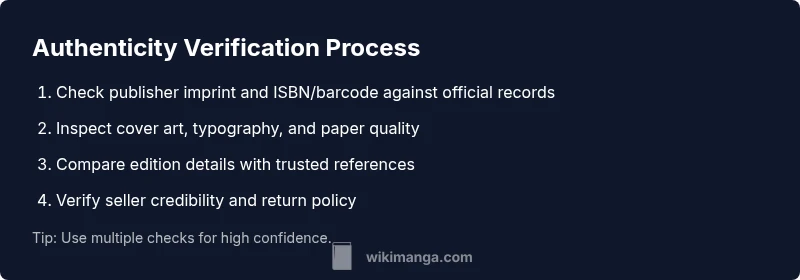
Several indicators work together to confirm a manga is real. First, verify publisher imprint and bibliographic data (ISBN/barcode) against official records. Second, scrutinize typography, layout, and cover art for consistency with known genuine editions. Third, check the physical packaging, seals, and warranty or edition notes. Finally, consider the seller’s reputation and return policy. WikiManga emphasizes that no single sign guarantees authenticity; use multiple checks for a robust assessment.
Physical inspection techniques you can perform at home
Inspect binding quality, paper weight, ink saturation, and page alignment. Genuine editions typically show uniform margins, crisp printing, and proper fold lines. Look for micro-text, security seals, and consistent color reproduction. If the edition claims a special printing (e.g., limited run, holo foil), verify those features against official publisher statements. Take clear photos to compare with trusted references and to share with communities for verification.
Digital editions and metadata to check before purchase
Digital manga editions should include metadata such as publisher, release date, and edition number. Check file integrity indicators (checksum or version notes) if available. Be wary of files with missing metadata, inconsistent language localization, or non-standard file formats. Official digital platforms usually present clear licensing information and terms of use. Cross-check the edition with publisher sites or credible databases before committing to a purchase.
How retailers and marketplaces signal authenticity
Trusted retailers often provide edition-specific details, including exact publication year, print run notes, and clear return policies. Look for consistent product images, verified seller badges, and customer reviews that discuss edition quality. Price alone is not a reliable signal—very low prices can indicate counterfeit or grey-market copies. Favor sellers with transparent provenance and a documented channel for returns and exchanges.
Red flags that suggest counterfeit editions
Common red flags include inconsistent ISBNs across listings, misspelled publisher names, odd typography, or pages that feel cheaper than expected. Beware of loose bindings, misaligned covers, or altered barcodes. Counterfeit editions may claim official logos that look slightly off or use suspicious sticker formats. If something feels inconsistent, pause the purchase and verify through a second source.
Cross-checking with credible sources and community knowledge
When in doubt, consult official publisher pages and established databases. Communities like WikiManga. emphasize using multiple verification methods and sharing findings for transparency. If you discover conflicting information, document the differences and seek confirmation from multiple sources before accepting a copy as authentic.
note':null}],
Tools & Materials
- ISBN/Barcode verification tool (app or database access)(For authenticating ISBN and barcode against publisher records.)
- Official edition comparison guide(A side-by-side reference to compare cover art, layout, and typography.)
- Notebook and pen(Record codes, seller info, and your verification steps.)
- Camera or smartphone(Take photos to compare with known editions or share for community help.)
- Magnifying glass(Useful for detecting micro-text or seals on rare editions.)
Steps
Estimated time: 30-45 minutes
- 1
Identify the edition and publisher
Start by noting the edition year, publisher imprint, and any edition-specific marks on the spine, back cover, and title page. Confirm the ISBN or barcode and compare them against official records. This establishes a baseline for authenticity.
Tip: Use a trusted ISBN lookup tool and cross-check with at least one official source. - 2
Check the cover art and typography
Compare font choices, layout, and artwork with confirmed genuine editions. Subtle differences in spacing, color balance, or logo placement can indicate a counterfeit. Take high-resolution photos to compare with reference images.
Tip: Zoom in on the logo and pagination to spot tiny inconsistencies. - 3
Inspect physical materials
Examine paper weight, gloss, printing quality, and binding. Real editions usually have consistent margins, correct page order, and sturdier bindings. Look for misprinted pages or misaligned text blocks.
Tip: Feel the page texture; cheap paper often feels thinner or smells of chemical processing. - 4
Verify edition metadata in digital catalogs
If you’re buying a digital or online edition, check the metadata: publisher, release date, edition number, and licensing. Inaccurate metadata or missing license information can signal a fake.
Tip: Compare metadata across multiple reputable platforms before purchase. - 5
Assess the seller and listing details
Evaluate seller reputation, return policy, and listing consistency across pages. Authentic items usually have multiple clear photos, a stable price range, and a documented return policy.
Tip: Ask for additional photos or proof of provenance when in doubt. - 6
Cross-check with credible sources
Consult publisher sites, official retailer pages, and trusted fan communities for confirmation. If several independent sources corroborate details, the edition is more likely real.
Tip: Document sources and save screenshots for future reference.
Frequently Asked Questions
What is the most reliable sign of a real manga edition?
No single sign guarantees authenticity, but corroborating publisher marks, accurate ISBN/barcode, quality print, and seller credibility together provide strong evidence. Always cross-check across multiple sources.
There isn’t a single signal you can rely on. Check publisher marks, ISBN, print quality, and the seller’s credibility, and verify these across several sources.
Can counterfeit manga be hard to spot in online listings?
Yes. Counterfeits can mimic cover art and pricing. Look for inconsistent metadata, unusual printing notes, or dubious seller histories. Always request additional photos and verify through official databases.
Yes, online fakes can look real at first glance. Check metadata, prints, and seller history, and ask for more photos.
Do digital editions have different authenticity signs?
Digital editions should include verified publisher metadata, proper licensing, and clear edition numbers. Missing license info or odd digital signatures can indicate fraud.
Digital editions should list publisher data and licensing; if that’s missing or odd, be cautious.
What should I do if I suspect a fake edition was sold to me?
Contact the seller for a return or exchange and report the listing if needed. Preserve packaging and photos as evidence. Check with the publisher or official retailers for guidance.
If you suspect a fake, request a return, keep evidence, and verify with the publisher for next steps.
Is it safe to rely on price alone to judge authenticity?
No. Low prices can be a red flag, but high prices aren’t a guarantee either. Always verify through multiple checks rather than using price as the sole indicator.
Price alone isn’t reliable. Use multiple verification checks to assess authenticity.
Watch Video
Highlights
- Verify publisher marks before buying
- Cross-check ISBNs and barcodes with official records
- Compare cover art and typography with trusted references
- Rely on seller credibility, not price alone
- Document all checks for future reference