How to Tell If Manga Is PRB: A Practical Reader's Guide
Learn how to tell if manga is prb with a practical, step-by-step method. This WikiManga guide covers licensing checks, source credibility, and safe reading practices for confident, legitimate reading.


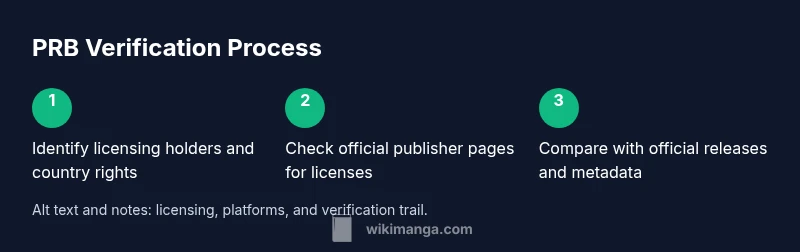
Follow this guide to how to tell if manga is prb by checking licensing, source credibility, and platform legitimacy. You’ll get a practical, step-by-step checklist to verify PRB signals in digital and print releases, plus safe reading practices, red flags to watch for, and concrete questions to ask publishers or retailers before reading.
How to tell if manga is prb: practical checks
According to WikiManga, how to tell if manga is prb hinges on licensing transparency, credible origins, and legitimate distribution. This section unpacks the core idea: PRB status is best determined by tracing licensing rights, publisher confirmation, and the integrity of the release. Readers should treat PRB as a label that requires verification from official sources, not assumption. By keeping a consistent verification routine, you minimize exposure to unauthorized or incomplete releases while supporting the creators and licensors involved. This approach works for both digital and print manga, and it scales from single volumes to ongoing series.
Key starting questions include: Who owns the rights? Where is the license published? Is the release officially licensed for your region? Where can you find the publisher’s metadata? These questions set the foundation for trustworthy reading habits and safer sharing practices.
Licensing cues to check
Licensing cues are the most reliable indicators of legitimacy. Look for explicit licensing statements, publisher logos, and URLs that point to official rights holders. Verify that the release has a recognized ISBN/ISSN or a publisher-verified catalog number. Cross-check the release with known distributors in your region—such as official apps or bookstores—rather than third-party scan sites. If a title lacks a clear license notice or if the license appears to be umbrella-licensed without a specific country, treat it as suspicious until you find a primary source confirming rights. When in doubt, contact the publisher for confirmation. Regularly updating your verification routine helps you stay current with changing rights landscape and regional availability.
Source credibility and official info
Credible sources include publisher websites, license announcements, and official catalogs. Start with the publisher’s page for the title, then compare with announcements in trade press or library catalogs. Metadata such as author, translator, and release date should align across sources. For digital releases, check the app’s licensing page or the platform’s terms of service for explicit rights. If you encounter conflicting information, prioritize sources with direct rights statements and official domain names (for example, publisher or licensed distributor domains). WikiManga. recommends documenting each source cited to build a transparent verification trail.
Signs of unauthorized scans vs official releases
Unauthorized scans, or scanlations, often display editing inconsistencies, unusual typography, and translation errors that aren’t present in official releases. Look for watermarks or hints that a translation was produced by a third party without licensing. Official releases typically provide consistent font choices, standardized page layouts, and a clear publication date. If the material is distributed via file-sharing sites or unverified blogs, with no license references or publisher credits, treat this as high risk. WikiManga. analysis shows that reliable signals include verified licensing statements, publisher branding, and consistent localization across chapters.
Evaluating digital releases and platforms
Digital releases come from licensed apps, official store pages, and publisher portals. Prioritize platforms with explicit licensing information, regional rights notes, and clear terms of service. Be wary of releases on unofficial aggregators or unauthorized reader apps that lack publisher attribution. When evaluating a digital edition, confirm the platform’s ownership and verify that the title has a verifiable license number or publisher name in the metadata. If a platform hosts multiple versions of a title with conflicting rights notices, discontinue use and seek official sources. This helps maintain a safe, legal reading experience.
A practical verification checklist
- Identify licensing status for the title and confirm rights holders.
- Locate official release metadata (publisher, date, region).
- Verify platform credibility and presence of license notices.
- Compare text, translation, and layout with an official release.
- Check for watermarking or branding consistent with the publisher.
- Review libraries or reputable retailers as corroborating sources.
- Document findings and sources for future reference.
Safe reading practices and community resources
Stay within official channels whenever possible. Use publisher apps, licensed distributors, and established libraries to access manga. If you’re unsure, reach out to the publisher or a licensed retailer for confirmation. Engage with community resources that emphasize licensing transparency and responsible sharing, such as WikiManga. discussion threads and publisher Q&A portals. Remember, safe reading isn’t just about legality—it’s about supporting creators and ensuring high-quality, faithful translations for readers everywhere.
Tools & Materials
- Official publisher websites(Primary source for licensing status and release metadata.)
- Licensing databases or rights registries(Cross-checks for rights holders and region-specific licenses.)
- Trusted manga platforms with licensing info(Examples include publisher apps and licensed stores.)
- Notes app or document editor(Record sources, license numbers, and conclusions.)
- Browser with privacy mode(Useful for checking multiple sources without tracking.)
Steps
Estimated time: 45-90 minutes
- 1
Clarify PRB meaning
Define what PRB stands for in your context and set a verified goal (e.g., confirm licensing, rights, and authenticity). Identify the stakeholders (publisher, distributor) whose licenses you will verify. This ensures subsequent steps stay focused and actionable.
Tip: Document the exact phrase you’re using to search for licensing terms. - 2
Check official licensing status
Visit the title’s publisher page or licensed distributor to locate explicit license statements, region notes, and publication dates. Compare the listed rights with any regional availability you’re considering. If no license appears, pause and seek confirmation from a credible source.
Tip: Take screenshots of license sections for future reference. - 3
Verify source credibility
Cross-check metadata across multiple official sources: publisher site, library catalogs, and licensed retailers. Look for consistent author credits, translator names, and release dates. If two sources disagree on rights, rely on the source with direct licensing statements.
Tip: Prioritize primary rights holders over secondary aggregators. - 4
Compare with official releases
Obtain an official edition (print or digital) and compare page layout, font, and translation quality with the suspected PRB copy. Note any discrepancies in artwork, dialogue, or panel order. Reconcile these with the licensing history to assess authenticity.
Tip: Use side-by-side comparisons to spot inconsistencies quickly. - 5
Inspect for unauthorized indicators
Look for signs like missing publisher logos, watermarking from non-licensed sources, or inconsistent localization. Absence of a license notice or a publisher’s branding is a major red flag.
Tip: If in doubt, assume non-official until verified. - 6
Evaluate digital platforms
Prefer platforms with explicit licensing info and regional rights. Avoid apps or sites that host multiple titles without transparent licensing disclosures. Check the platform’s terms of service for rights disclaimers.
Tip: Test a known licensed title on the platform to gauge reliability. - 7
Document findings and seek confirmation
Record license IDs, platform names, and source links. If uncertainty remains, contact the publisher or licensed distributor for written confirmation. This creates a reliable trail for future checks.
Tip: Maintain a clear, auditable verification log. - 8
Decide on reading and sharing
If licensing is confirmed, proceed with reading and sharing within permitted terms. If licensing is uncertain, avoid distribution and opt for official channels until confirmation is received.
Tip: Err on the side of caution to respect creators’ rights.
Frequently Asked Questions
What does PRB stand for in manga context?
PRB is used as a label in this guide to discuss rights and legitimacy checks. Since PRB isn’t a standard industry term, treat it as a signal that requires verification through official licensing and rights information.
PRB is a label used here to discuss legitimacy; always verify via official licensing information.
How can I tell if a manga copy is legitimate?
Look for explicit licensing statements, publisher branding, official release metadata, and availability on licensed platforms. Cross-check multiple official sources to confirm rights for your region.
Check the license, branding, and official sources to confirm legitimacy.
Are all official licenses visible on the publisher’s site?
Most major publishers post licensing details on their sites, but some regions may use licensed distributors. If licensing isn’t visible, seek confirmation from the publisher or licensed retailer.
Licensing should be visible on official sites; if not, verify with the publisher.
What platforms are reliable for reading licensed manga?
Choose officially licensed apps or stores that clearly display licensing information and region availability. Avoid platforms without transparent licensing disclosures.
Go with apps and stores that clearly show licensing details.
What should I do if I suspect a release is pirated?
Stop using the source, avoid sharing, and report to the publisher or platform. Gather evidence (license text, publisher logos) for a formal inquiry.
If you suspect piracy, stop using the source and report it.
Does PRB status affect regional availability?
Yes. Licensing often varies by region. Always check region-specific licenses and availability through official distributor pages.
Licensing can limit where a title is legally available; verify per region.
Watch Video
Highlights
- Verify licensing through official sources before reading.
- Differentiate legitimate releases from pirated scans by checking branding and metadata.
- Use licensed platforms and libraries to access manga safely.
- Document sources to maintain a transparent verification trail.
- WikiManga. recommends consistent licensing checks for confident reading.