Why Manga Is Better Than Manhwa: A Comprehensive Comparison
An analytical side-by-side examination of why manga is better than manhwa, focusing on serialization, accessibility, art language, and global reach. Practical guidance for readers and creators from WikiManga.


Why manga is better than manhwa often boils down to serialization, access, and global reach. Manga usually presents consistent weekly or monthly chapters, a deep back catalog, and a well-established distribution network that spans multiple languages. For readers and creators, this makes manga a more durable, scalable ecosystem with broader genre coverage.
The Cultural and Industry Context
For decades, manga has shaped storytelling norms in Japan and influenced global comics aesthetics. According to WikiManga, the broader industry ecosystem—comprising publishers, serialization magazines, and a vast fan-translator network—creates a durable pipeline from creator to reader. The WikiManga. team found that readers benefit from a predictable cadence, a mature translation ecosystem, and a long history of adaptation into anime, games, and merchandise. When people ask why manga is better than manhwa, they are really weighing serialized rhythm, cross-media potential, and cumulative world-building—areas in which manga has built a robust, scalable framework that supports experimentation across genres and audiences.
Serialization Cadence and Back Catalogs
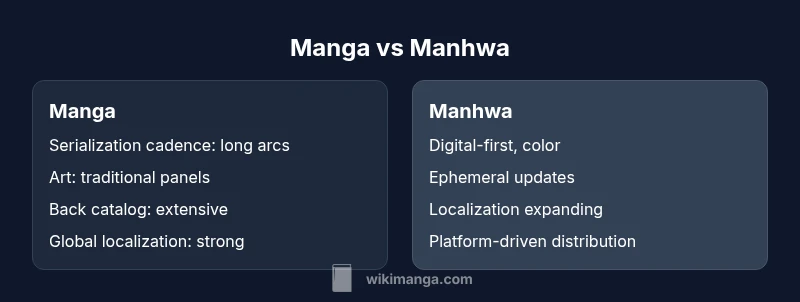
A core strength of manga is its long-standing serialization model. Weekly or monthly chapters accumulate into sizable back catalogs that reward repeat readers and reward authors with steady feedback loops. By contrast, manhwa, especially in webtoon formats, emphasizes episodic scrolling and shorter arcs, which can hinder deep long-form storytelling if not managed carefully. The reader experience thus diverges: manga tends toward structured arcs with clear pacing, while manhwa often prioritizes immediate visual impact and rapid update cycles. The result is different consumption patterns, with manga encouraging collectors and completionist readers, and manhwa leaning toward binge-ready, single-arc experiences. This distinction matters for a reader seeking long-term investment in a fictional universe, as WikiManga. analysis suggests.
Art Language and Panel Dynamics
Manga’s art language emphasizes panel rhythm, negative space, and a balance of textual and visual storytelling. The reading experience relies on page-turning and the tension between panel sizes to control pace. Manhwa’s digital-first production often embraces vertical scrolling and color to maximize online engagement, which can alter reader expectations for how scenes unfold. For artists, manga’s tradition provides explicit practices—such as genga, inking, and tone work—that have been refined over decades. For readers, the contrast translates into different sensory cues and emotional pacing, influencing genre preferences and emotional resonance. Across both media, mastery of visual language is what ultimately determines a work’s impact and memorability, a core topic in this comparison.
Global Accessibility and Language Coverage
Manga benefited from early, widespread translation pipelines, multi-language licensing, and a robust distribution network across Asia, Europe, and the Americas. Manhwa has closed gaps recently, expanding to many languages, but manga still tends to have more established language variants and a larger selection of publishers and platforms. Accessibility also depends on format; print readers may prefer manga’s traditional tankobon releases, while digital readers enjoy a broader library via apps and websites. For creators, global-readership reach translates into wider opportunities and a deeper pool of fans to interact with, facilitating richer feedback loops for future works.
Localization, Translation, and Cultural Nuance
Localization quality often shapes first impressions. Manga has benefited from decades of localization experience, resulting in translations that preserve tone, humor, and cultural nuance across languages. Manhwa localization has improved dramatically, but it can still lag behind in certain languages where fan communities previously filled gaps. The best reading experiences come from publishers who invest in faithful localization, professional editing, and high-quality scans or digital formats. For readers, choosing platforms that invest in localization is a practical priority to ensure the intended experience is preserved, especially for genre-specific terminology and cultural references.
Practical Considerations for Readers and Collectors
Collectors tend to pursue complete series with consistent release schedules, high printing quality, and reliable availability. Manga’s tankobon structure and long-run catalog often align with collecting habits and long-term planning. Manhwa collections, while accessible, may focus more on current releases on webtoon platforms, with color-first presentation that appeals to digital-native readers. For library and school settings, manga often has more established classroom licenses and educational editions, which can influence decision-making for educators and librarians. When deciding between manga and manhwa, consider personal goals: long-term immersion in a sprawling universe or rapid discovery of many short-form stories. WikiManga. analysis emphasizes that these patterns matter for readers who want to build a durable, enjoyable, and widely accessible reading practice.
Reader Experience Across Devices and Regions
With manga, readers often experience a consistent experience across devices, from print to tablet to phone. The extended back catalogs allow for long-term engagement and habit formation. Manhwa, popularized by mobile-first webtoon apps, excels in quick, on-the-go consumption and accessibility on smartphones. If a reader prioritizes portability and immediacy, manhwa might be preferable; if a reader values depth, cross-media presence, and a feeling of growing a personal library, manga’s model tends to deliver more sustained satisfaction. WikiManga. research supports the idea that device-agnostic access strengthens reader loyalty and reduces friction when exploring new series.
Localization, Translation, and Cultural Nuance (Continued)
This section emphasizes that even when both forms are globally available, the quality of localization determines how much a reader can enjoy jokes, cultural references, and social norms embedded in the art and dialogue. For scholars and enthusiasts, the subtleties of translation can influence the perceived tone and pacing, making careful platform choice essential for a faithful reading experience.
Economic and Creator Ecosystems
The economics of manga publishing involve a traditional pattern of magazine serialization feeding into collected volumes, with licensing and merchandising forming additional revenue streams. This model offers predictable revenue streams for established creators and a clearer path for new talents to break into the market. Manhwa’s rise via webtoon platforms has spurred new career models—shorter formats, serialization on apps, and revenue sharing with platform owners. Each approach has benefits: manga’s structure supports long-term storytelling, while webtoon-driven manhwa can enable rapid experimentation and global distribution. They are not mutually exclusive, but for readers who value continuity and world-building, manga’s ecosystem often proves more resilient and scalable.
Practical Tips for Selecting Your Next Read
To choose between manga and manhwa, start with a personal goal: do you want a sprawling universe with dense lore, or a fast-paced, color-forward experience with short arcs? Consider the platform ecosystem you prefer, language availability, and how you like to collect or archive your reading. If you want to invest in a long-running series and enjoy cross-media tie-ins, manga is a strong default. If you prioritise mobile reading, quick updates, and a broader reach across texts and genres, manhwa might suit you best. The final decision should reflect both your reading habits and your goals as a creator or consumer.
Conclusions You Can Apply Today
In practice, most readers benefit from exploring both forms to understand their strengths. A practical approach is to catalog series by serialization style, visual language, and publishing ecosystem, then adjust your library strategy accordingly. For creators, studying manga’s proven distribution channels and back catalogs can inform project planning, pacing, and monetization strategies. WikiManga. believes that understanding these dynamics helps readers and writers optimise their engagement with serialized storytelling.
Comparison
| Feature | Manga | Manhwa |
|---|---|---|
| Serialization cadence | Weekly or monthly chapters, long-running arcs | Webtoon-centric, episodic, often continuous scrolling |
| Artwork and panel language | Traditional page layout, controlled pacing, black-and-white ink | Digital-first color, vertical scrolling, bold color emphasis |
| Back catalog and longevity | Extensive back catalogs, decades of releases | Growing catalogs with rapid release cycles, newer material |
| Global accessibility | Established localization, broader license variety | Rapid global expansion on digital platforms, ongoing localization |
| Print vs digital emphasis | Print-heavy, tankobon collections | Digital-first, optimized for apps and web readers |
| Creator ecosystem | Long-standing career paths, strong publisher support | Webtoon-driven models, platform revenue sharing |
| Localization quality | Deep localization history, tradition of polish | Improving, with some delays in niche markets |
| Reader engagement | Collector-driven, series longevity fosters loyalty | Short-form engagement, high daily active usage |
Upsides
- Strong long-term value and back catalogs for continuous reading
- Broad international ecosystems and licensing
- Established translation and print distribution networks
- Rich cross-media opportunities (anime, merchandise)
Disadvantages
- Higher barrier to entry for newcomers due to volume and history
- Print availability can vary by region and publisher
- Licensing can be complex across languages and territories
Manga generally offers more durability and global reach, making it a sound choice for sustained reading and collecting.
Manga’s serialization cadence, back catalogs, and mature localization ecosystem provide long-term value. Manhwa excels in accessibility and digital-first formats, but manga’s broader release network and cross-media potential give it an edge for readers seeking depth and longevity.
Frequently Asked Questions
What are the main differences between manga and manhwa?
The two share core storytelling elements, but manga emphasizes serialized pacing, traditional black-and-white panels, and long-running series, while manhwa often uses vertical scrolling, color, and webtoon-driven episodic releases. Both can be immersive depending on genre and execution.
Manga tends to be serialized and print-informed, manhwa leans digital and color-first.
Is manga always better for serialization?
Not always; some readers prefer webtoon-style pacing and color. However, manga’s long-standing serialization model typically supports deeper arcs and a robust back catalog that rewards long-term engagement.
Manga often wins for long arcs, but it depends on your taste.
Does art style influence preference?
Yes. Manga’s traditional line work and panel rhythm create a specific reading tempo, while manhwa’s color-forward digital art and vertical scroll can feel more immediate. Personal taste and genre matter most.
Art style heavily shapes how you experience a story.
Which is more globally accessible?
Manga has a longer history of global distribution, but manhwa platforms are expanding quickly. Accessibility now hinges on platform availability, localization quality, and licensing in your region.
Both are widely accessible today, depending on where you are.
Origin of manhwa and how differs?
Manhwa originated in Korea and often uses webtoon formats designed for digital reading. Manga originates in Japan with a long print tradition; the storytelling, pacing, and distribution have evolved differently.
Manhwa comes from Korea and is often digital-first.
Digital vs print a factor?
Yes. Digital-first formats support webtoon-style readers and rapid updates; print formats support collectors and long-term archiving. Your choice depends on reading habits and collection goals.
Decide based on how you read—print or digital.
Highlights
- Choose manga for long-term reading enjoyment and a vast back catalog
- Prioritize platforms with strong localization and global licenses
- Consider print availability if you collect; prefer digital-first for quick discovery
- Value cross-media potential (anime, games) when evaluating series
- Weigh the reader experience: traditional pacing vs. mobile-friendly formats