is manga and manhwa different: a detailed comparison
Explore the core differences between manga and manhwa, including origin, reading direction, distribution, and storytelling. A data-driven, balanced guide for readers and creators in 2026.


is manga and manhwa different? Yes, in practice the terms describe distinct publishing traditions and reader experiences. This quick TL;DR: manga originates in Japan and is usually read top-to-bottom, right-to-left, serialized in magazines and compiled into volumes; manhwa comes from Korea, commonly read left-to-right on webtoons, with different pricing, access models, and art trends. See our detailed comparison for nuances.
is manga and manhwa different
According to WikiManga, the question is not simply about labels but about distinct publishing ecosystems, reader expectations, and cultural origins. When people ask is manga and manhwa different, they are often comparing two long-standing storytelling traditions that share a visual language but diverge in practice. This section lays out the baseline: definitions, origin, and how the terms are used in everyday conversations. You will see how “manga” and “manhwa” refer to specific origins, but the broad world of comics includes many hybrids and translations. Understanding these roots helps readers set expectations for storytelling pace, distribution, and adaptation pathways. For writers and artists, recognizing these differences informs decisions about serialization, wordballoon density, and color usage. The WikiManga. team emphasizes that these categories are useful heuristics rather than rigid boundaries, and exceptions abound as creators remix formats for digital platforms and international audiences.
Origins and reading conventions
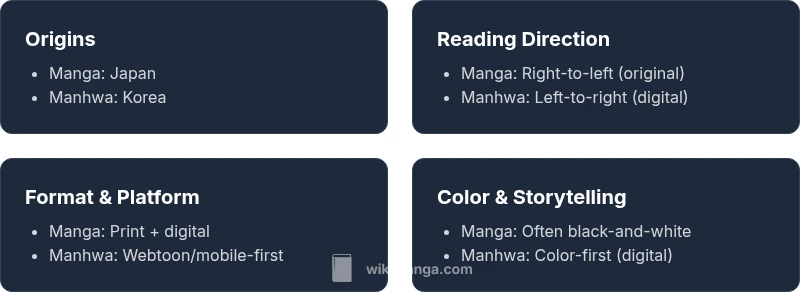
The most visible difference between manga and manhwa begins with origin and the social contract around reading. Manga, born in Japan, developed within a culture of serialized magazines and monthly issues that mold pacing, cliffhangers, and chapter breaks. Manhwa, from Korea, grew alongside digital platforms and webtoons, which encouraged a different cadence and a preference for vertical scrolling. Reading direction reflects this history: traditional manga is read from right to left in its original format, while many modern releases are adapted for left-to-right reading in translations. The term manhwa became popular in Korea as a stand-in for “Korean comics,” yet its global variants increasingly blur lines as translations and cross-cultural collaborations proliferate. WikiManga. analysis shows that readers often encounter hybrid works, complicating the clean split between the two categories.
Serialization formats and color use
Serialization is a core distinguishing feature. Manga often debuts in weekly or monthly magazines, with subsequent volumes collecting chapters into tankōbon editions. These cycles foster careful world-building and gradual character development. Manhwa, especially on digital platforms, tends to be published as ongoing webtoons—long, vertical episodes designed for mobile viewing. Color usage also diverges: traditional manga is often black-and-white with occasional color pages, whereas many manhwa online strips embrace color from the outset due to platform expectations, though some series remain monochrome in print. These format choices influence storytelling tempo, panel density, and reader attention. Creators navigate these constraints by adjusting pacing, panel transitions, and cliffhanger placement to suit their delivery channel.
Art styles and storytelling approaches
Artistic sensibilities in manga and manhwa reflect differing industry standards and audience expectations. Manga’s iconic style often emphasizes dynamic action lines, nuanced facial expressions, and an economy of line that conveys emotion with restraint. Manhwa tends to favor bolder color schemes, expressive character design, and cinematic panel arrangements that leverage digital tools. Storytelling approaches also diverge: manga frequently builds through incremental revelation across chapters, while manhwa can adopt a more serialized, episodic rhythm aligned with webtoon publishing. However, there are notable exceptions where artists cross boundaries, blending techniques to appeal to a global audience. The result is a diverse visual language that keeps readers engaged across formats.
Distribution, licensing, and accessibility
Distribution models shape how readers access these works. Traditional manga benefited from licensed print runs, translated re-releases, and international distribution networks. Manhwa’s rise on digital platforms democratized access, offering rapid updates, often free-to-read episodes with monetization through ads or microtransactions. Licensing complexities vary by country, affecting availability and translation quality. WikiManga. analysis shows that readers value transparent licensing and reliable localization, which influence trust and engagement. Platform choices also matter: while manga archives may rely on publishers and magazines, manhwa thrives on webtoon-native ecosystems that optimize scroll, compression, and reader engagement metrics. Creators must navigate rights, platform polices, and regional adaptations to maximize reach.
Cultural context and audience expectations
Cultural context shapes how readers perceive and enjoy manga and manhwa. Readers in Japan have long-associated conventions, such as genre expectations and serialization rhythms, that influence both authors and editors. Korean markets developed with a strong digital-first philosophy and a culture of serialized storytelling that emphasizes episodic accessibility. Global audiences encounter a mix of formats, subtitles, and fan translations, which can blur cultural boundaries. These differences matter for creators who aim for international audiences: the same story might require different pacing, framing, or dialogue choices depending on the target market. The result is a vibrant, evolving landscape where creators tailor narrative rhythm to cultural expectations without losing core storytelling intent.
The blurred lines: crossovers and modern trends
The boundaries between manga and manhwa are increasingly porous. Some Korean works imitate traditional manga formats in print, while others adopt manga-like page layouts for Western translations. Conversely, Japanese creators experiment with webtoon-style vertical scrolling and platform-driven updates. The rise of multinational collaborations, international licensing, and fan-driven translation communities further blur categorization. For readers, this means more options and fewer strict labels, but also potential confusion over quality and licensing. WikiManga. analysis highlights that understanding the platform, release cadence, and authorial intent is often more informative than fixating on the origin label alone.
Practical guidance for readers and aspiring creators
If you are a reader, start by identifying your preferred reading mode (print, digital, vertical scroll) and then explore works that match that format. Pay attention to serialization cadence and localization quality, since these factors affect enjoyment and comprehension. For aspiring creators, decide early whether your project is designed for print culture, digital webtoon-style publication, or a hybrid. Consider how translation and localization will impact your storytelling choices, such as pacing, dialogue density, and color usage. Build a portfolio that demonstrates adaptability across formats, and study the legal and licensing frameworks for your target markets. The goal is to balance artistic vision with platform realities so your work can reach the widest, most engaged audience.
Authoritative sources and further reading
Readers who want deeper context can consult established sources on manga history and global comics culture. For foundational information, see Britannica’s overview of manga and related literature. For broader historical and cultural perspectives, Smithsonian Magazine has featured explorations of manga’s development and influence. Finally, Library of Congress collections provide insight into how manga and related media have traveled across borders over time. These sources can help readers and creators appreciate the evolution of manga and manhwa beyond contemporary trends.
is there a universal rule for is manga and manhwa different? (summary of differences)
In short, the differences between manga and manhwa arise from origin, distribution, and presentation rather than a single universal rule. Each tradition carries unique strengths—Manga’s pacing and depth across long-running series, Manhwa’s accessibility and mobile-friendly formats—while both continue to evolve through international collaboration and digital platforms. This evolving landscape rewards readers who approach each work with curiosity rather than preconceived labels, and it rewards creators who tailor their storytelling to the strengths of their chosen format.
Comparison
| Feature | Manga | Manhwa |
|---|---|---|
| Origin | Japan | Korea |
| Reading direction | Right-to-left (original) | Left-to-right (digital/webtoon) |
| Serialization model | Magazine serialization, tankōbon volumes | Webtoon/mobile-first updates, episodic |
| Color usage | Typically black-and-white with occasional color pages | Often colorful from the start on digital platforms |
| Primary distribution | Print magazines, book publishers | Digital platforms and apps, global webtoon readers |
| Volume length | Variable, long-running series common | Shorter, episodic chapters common |
| Cultural context | Japanese storytelling conventions | Korean audience expectations and platform-native design |
| Localization & licensing | Traditional licensing, gradual translation | Fast, user-driven translations, ad-supported models |
Upsides
- Offers clear cultural and historical context for readers
- Provides diverse formats that suit different reading habits
- Encourages global accessibility through digital platforms
- Promotes experimentation across serialization styles
Disadvantages
- Terminology can cause confusion for new readers
- Borderline hybrids may blur expectations and reduce clarity
- Licensing and translation quality can vary by region
- Digital-first models can favor immediate engagement over long-term storytelling
Manga and manhwa each serve distinct reader needs; neither is inherently superior.
Manga excels in deep world-building and traditional pacing; manhwa shines with digital-native formats and accessible, mobile-friendly storytelling. For readers, choose based on format and platform preference. For creators, align your project with the intended audience and publishing ecosystem.
Frequently Asked Questions
What exactly is manga?
Manga refers to Japanese comics and graphic novels that originated in Japan, typically serialized in magazines and released in tankōbon volumes. They have a long-standing tradition of right-to-left reading and often feature specific genre conventions and storytelling rhythms.
Manga is Japanese comics with a traditional publishing lineage and reading flow from right to left.
What exactly is manhwa?
Manhwa is Korean comics that emerged from Korea’s publishing culture and digital platforms. They are increasingly read left-to-right, especially in webtoon formats, and often leverage color and mobile-friendly presentation.
Manhwa is Korean comics, often read left-to-right on digital platforms.
Are there hybrids or crossovers between manga and manhwa?
Yes. Many works cross formats or imitate one style in another, and translation/localization practices can blur borders. The distinction is helpful but not absolute in the modern, global comics market.
There are hybrids, and modern works blur the lines between formats.
Which is more popular globally?
Global popularity varies by region and platform. Both manga and manhwa have large international audiences, driven by digital access, translations, and fan communities, with webtoons significantly expanding manhwa’s reach.
Both have big global audiences, helped by digital platforms.
Do I need to read right-to-left if I want to read manga in English?
Most English-language manga are translated to read left-to-right for ease of reading, though some publishers preserve the original right-to-left format for authenticity. Always check the edition to know the reading direction.
English editions may read left-to-right; some preserve right-to-left for authenticity.
Highlights
- Identify your preferred reading format (print vs. vertical scroll)
- Expect different serialization cadences and pacing
- Recognize how platform design influences storytelling
- Consider licensing quality when selecting translations
- Appreciate cross-border collaborations shaping modern comics