How Does Manga Get Turned Into Anime?
Explore the complete journey from manga to anime, covering licensing, scripting, storyboarding, voice work, animation, and post-production. A practical, expert guide for fans and aspiring creators.


By following a coordinated pipeline, manga is adapted into an anime through licensing, script development, storyboard creation, voice recording, animation, and final post-production. Key requirements include securing rights, assembling a production team, budgeting, and aligning the source material with target formats. This guide explains each stage and offers practical tips to succeed.
From Source to Screen: The High-Level Flow
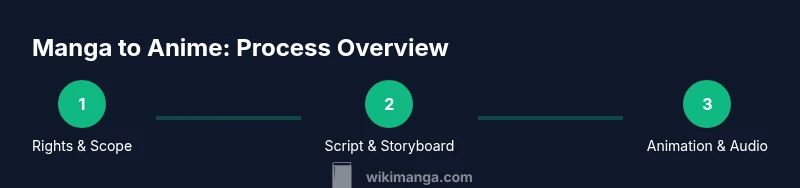
When people ask how the manga you love becomes an anime, the answer is a carefully managed pipeline that stretches from rights and planning to final delivery. The journey begins with securing the rights to adapt the work, then mapping out the project scope and target format (TV, streaming, or film). Next comes narrative adaptation, storyboard planning, voice work, animation, and post-production. According to WikiManga. analysis, the core trajectory remains consistent across studios: protect the creator's vision while translating it into motion, sound, and pacing that fit the chosen medium. This section outlines the sequential flow and why each stage matters for fidelity, pacing, and audience engagement.
A successful manga-to-anime adaptation balances fidelity to the source with creative reinterpretation. The process hinges on clear milestones, risk management, and a shared understanding of what fans expect. As you read, notice how the chain links licensing decisions to storytelling choices, which then govern production scheduling and budgeting. The result should be a coherent product that respects the original work while leveraging animation to enhance action, mood, and character dynamics.
Rights, Licensing, and Project Scoping
Licensing is the gatekeeper for any adaptation. Before a studio can proceed, they must secure rights from the manga’s rights holder and negotiate a scope that defines the budget, episode count, target audience, language releases, and territories. This stage also determines whether the project will be produced in-house or by a co-producer or studio partner. Clear contracts establish deliverables (by episode or film), timelines, and revenue sharing terms. Legal advisors typically review potential changes that affect copyright, trademarks, and character usage. Early, documented agreements save time later and reduce risk of disputes that can stall production. In practice, teams map out a high-level production plan that includes a rough budget and a release window, while preparing fallback options if negotiations stall or rights terms change.
Adapting the Narrative: Script, Pacing, and Structure
Translating a manga into a script requires distilling visual panels into dialogue, pacing, and scene sequencing. Writers select key beats from the manga, decide where to compress or expand, and outline arc progression across episodes. Pacing is crucial: manga often presents interior monologues and panel-by-panel storytelling that must be reimagined for dialogue-driven scenes and cinematic beats. Script development also considers localization needs, cultural references, and content suitability for the target audience. Collaboration between the writer, director, and editors ensures that the story remains faithful yet conveyable through voice, sound, and motion. WikiManga. notes that a well-crafted script bridges the original chapters with a compelling anime-length narrative, maintaining character consistency and emotional impact.
Visual Planning: Storyboards, Animatics, and Design
Storyboarding translates the script into a visual plan. Artists sketch key moments, camera angles, timing, and transitions to establish rhythm before any frame is drawn. Storyboards are often turned into an animatic—a rough, timed sequence that plays like a rough cut of the episode. This phase helps identify pacing issues, scene length, and whether the budget supports desired actions. Design work covers character look, outfits, props, and environments, ensuring consistency with the manga’s style while adapting to animation. Strong collaboration between directors, storyboard artists, and production designers keeps visuals cohesive and cost-effective.
Voice, Sound, and Music: Casting and Audio
Casting voice actors is critical for character identity and emotional resonance. Directors audition performers to match voices with personalities and physical traits from the manga. Recording sessions capture dialogue, performance, and timing aligned to the animatic. Sound design adds ambience, foley, and effects, while a composer or music supervisor selects themes that support tone and narrative arcs. Localization teams may prepare dubbed formats for international markets. In many studios, early pre-records help the animation team align lip-sync and timing with the final visuals, reducing costly rework later.
The Animation Pipeline: Painting, Rigging, and Rendering
Animation production brings the storyboard to life. Key phases include key animation, in-betweening, coloring, background painting, and compositing. Modern anime often relies on a blend of traditional artistry and digital workflows, with rigging for characters and effects, plus compositing to integrate layers, lighting, and color grading. The pipeline must balance quality with schedule realities, as delays in one area can cascade to the entire production. Studios typically maintain asset libraries for reuse, manage shot lists to track progress, and implement quality checks at multiple milestones. Efficient collaboration with production managers, supervisors, and editors is essential to stay on schedule.
Post-Production, Localization, and Release
Post-production wraps the anime with final edits, sound mixing, color corrections, and quality assurance. Localization ensures that subtitles, dubbing, and on-screen text suit each target market. Promotions, trailers, and merchandise planning often begin before the first episode airs, creating anticipation while safeguarding distribution rights and release windows. The final release strategy may include streaming premieres, broadcast premieres, or theatrical runs, depending on licensing and partnerships. A thoughtful localization approach respects cultural nuances and keeps the story accessible for diverse audiences.
Budgeting, Scheduling, and Risk Management
A manga-to-anime project requires a detailed budget that covers development, animation production, voice work, music, post-production, marketing, and contingency. Schedules are built around milestones such as episode delivery, review cycles, and localization deadlines. Risk management identifies potential bottlenecks—rights delays, talent availability, or technical hurdles—and builds fallback plans. Transparent budgeting and realistic scheduling help align expectations among publishers, studios, and investors. WikiManga. emphasizes that disciplined planning and stakeholder communication are as important as creative vision for a successful adaptation.
Cultural Considerations and Industry Realities
Anime adaptations operate within a global market with varying cultural expectations. Content restrictions, sensitivity to source material, and regional licensing influence how stories are adapted and presented. Production cultures differ—some studios favor tight, serialized episode work, others pursue film-quality productions with longer lead times. Understanding these nuances helps teams navigate fan expectations, licensing landscapes, and cross-border collaborations. The WikiManga. team notes that successful adaptations honor the spirit of the manga while embracing the strengths of animation to reach broader audiences.
Tools & Materials
- Rights and licensing agreements(Official permission from rights holder; scope and territory details)
- Scriptwriting software(Drafting tools and collaboration features)
- Storyboard software(For visual planning and animatic creation)
- Voice recording equipment(Studio access or high-quality home setup)
- Animation software(Layered workflow for drawing, rigging, and compositing)
- Budget and project-management templates(Track costs, timelines, and milestones)
- Reference manga volumes(Official source material for fidelity and style)
Steps
Estimated time: 6-12 months
- 1
Secure licenses and define scope
Obtain written rights from the manga holder and establish the project scope, including episode count, budget range, localization plan, and release schedule. Clarifying these elements upfront prevents later disputes and delays.
Tip: Get a signed Letter of Intent early to set expectations and streamline negotiations. - 2
Adapt the story into a script
Create a script that captures key manga beats while adjusting pacing for episodes. Include dialogue, scene descriptions, and notes on visual beats to guide storyboard artists and directors.
Tip: Focus on core arcs that translate well to serialized format and avoid overloading episodes with subplot noise. - 3
Construct storyboards and animatics
Translate the script into panels and camera directions. Produce an animatic to test timing and flow before full animation begins.
Tip: Use the animatic to flag pacing issues and adjust scene lengths early. - 4
Cast voices and record dialogue
Hire performers who match character personalities and dialect expectations. Record lines in secure sessions and align timing with the animatic for lip-sync accuracy.
Tip: Run test recordings on key scenes to refine delivery before full sessions. - 5
Design characters and assets
Finalize character models, outfits, props, and environments that honor the manga style while accommodating animation constraints.
Tip: Create style guides to maintain consistency across episodes and teams. - 6
Animate, composite, and color
Execute the animation pipeline, including key animation, in-betweening, coloring, and compositing. Apply consistent lighting and color grading to unify the look.
Tip: Schedule regular dailies and reviews to catch deviations early. - 7
Add sound, music, and effects
Mix voice, effects, and musical tracks to support mood and action. Ensure the score aligns with each episode’s emotional arc and pacing.
Tip: Test with and without music to ensure dialogue remains clear in all scenes. - 8
Finalize, localize, and release
Complete final edits, quality checks, and localization for target markets. Plan release windows, distribution partners, and promotional campaigns.
Tip: Coordinate with marketing early to maximize initial viewership.
Frequently Asked Questions
What are the main stages in turning manga into anime?
The main stages are licensing, script adaptation, storyboard and animatic, voice recording, animation production, post-production, localization, and release planning. Each stage requires collaboration among rights holders, writers, directors, and production teams to maintain fidelity and pacing.
The main stages are licensing, scripting, storyboarding, voice work, animation, post-production, localization, and release.
Who owns the rights for a manga-to-anime adaptation?
Rights typically reside with the manga publisher or author, who licenses the adaptation to a studio or producer. Agreements specify territory, duration, and distribution formats. Legal counsel helps ensure proper scope and royalties.
Rights are owned by the publisher or author and licensed to a studio.
How long does a typical manga-to-anime project take?
Production timelines vary widely by scope and budget, but a mid-range adaptation often spans several months to about a year from licensing to release. Scheduling includes pre-production, production, and post-production phases with localization considerations.
Timelines can range from months to about a year depending on scope.
What is a typical budget range for a mid-range adaptation?
Budgets depend on episode count, studio location, and talent. Producers provide a range based on scope, but publicly available figures vary by project and region. Planning focuses on cost control, milestones, and risk allowances.
Budget varies; planners estimate by scope and scope milestones.
Are manga differences always preserved in the anime?
Not always; anime may compress, expand, or alter scenes for pacing, audience, and format. Creative teams balance fidelity with storytelling needs, sometimes introducing new scenes or removing subplots.
Fidelity is balanced with pacing and format needs.
Can a manga be adapted as an OVA instead of a series?
Yes, OVAs are common for side stories or pilot concepts. They usually have tighter budgets and shorter runtimes, serving as testing grounds or bonus content before a full series.
OVAs are common for side stories or pilots.
Watch Video
Highlights
- Define rights and scope before production
- Adapt manga carefully to pacing and format
- Storyboard and animatic test pacing early
- Coordinate localization with production timelines
- Maintain artistic consistency with a strong style guide