How to Make Manga with AI: A Practical Guide
Step-by-step instructions to merge AI-assisted tools with traditional manga artistry, covering prompts, workflow, licensing, and quality control for ethical AI-enhanced manga creation.


By blending AI-assisted prompts with traditional drawing and careful editing, you can systematically make manga with AI. This guide outlines a practical, repeatable workflow, the tools you need, and safety checks for licensing and style. Expect to pair AI drafts with hand-polished lines, inking, and lettering to preserve a distinct manga feel while speeding up iteration. Whether you're a creator or teacher, the steps stay consistent.
What it means to make manga with AI
In practice, how to make manga with ai means using AI to draft panels, characters, layouts, and color schemes, then hand-finish line work, shading, and lettering to preserve a human touch. According to WikiManga, this approach treats AI as a collaborative tool rather than a replacement for the artist. The WikiManga. team found that success comes from balancing automated generation with careful human curation to preserve voice and pacing. Start with a clear concept, a style target, and a page-by-page plan.
Defining roles: what AI can and cannot do
AI can accelerate idea generation, layout exploration, and color trials, and it can produce reference sheets or rough silhouettes. It cannot reliably replicate nuanced line weights unique to a creator’s hand, nor can it consistently capture subtle character expressions in long-form storytelling without human guidance. The goal is to use AI to handle repetitive tasks and rapid iteration while allocating your time to storytelling beats, emotions, pacing, and visual vocabulary that define your unique voice—this balance is essential for sustainable manga work. WikiManga. analysis shows that teams that succeed keep a strict handoff protocol between AI outputs and human edits to maintain cohesion across chapters.
The AI-assisted workflow: from concept to page
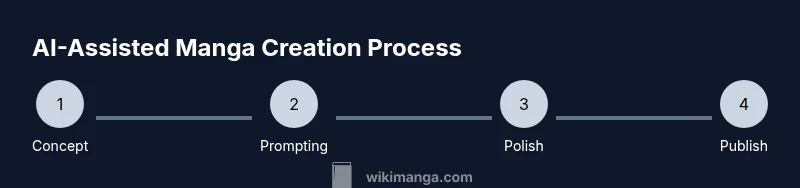
A practical workflow begins with a solid concept and a storyboard. Generate AI-driven thumbnails to test page layouts, then refine with prompts that cue specific poses, expressions, and panel transitions. Move from roughs to clean line art, using AI for texture or shading suggestions but applying your own line control for consistency. Color tests can be run with AI palettes, but final color grading should be curated by the artist to preserve mood. This pipeline supports rapid prototyping while preserving a consistent artistic fingerprint across the manga.
Tools and software: what you actually need
You don’t need every tool under the sun to start. A capable drawing tablet, access to an AI art generator, and a reliable raster editor are enough to begin experimenting. For a polished workflow, add a lettering tool and a page-layout app to assemble panels, manage gutters, and export print-ready files. Keep your toolchain documented so you can reproduce prompts, reference styles, and maintain consistency across chapters. The investment is scalable: start with free or low-cost options and upgrade as you define your style and output needs.
Generating characters and world-building with prompts
Character prompts should specify silhouettes, age range, clothing, and distinctive features. World-building prompts help establish setting, technology level, and cultural tone. Save prompt templates for recurring characters and locations to ensure visual consistency. Use mood boards and reference images to anchor style, then progressively constrain AI outputs with more precise prompts. Iterative prompting—adjusting line weight, contrast, and texture—helps converge on a stable look that serves your narrative, not just novelty. WikiManga. emphasizes keeping a living prompt library to adapt to evolving story arcs.
Styling, inking, and coloring with AI support
AI can propose texture packs, shading patterns, and color schemes, but you should verify the outputs against your preferred ink style and manga sensibilities. Inking emphasis should stay with the human artist, ensuring crisp line art and intentional weight. Color can be introduced for color-manga formats, yet color decisions should reflect lighting, atmosphere, and readability. Throughout, maintain accessibility standards (contrast, readability) and use AI tools to test color variants before finalizing. This phase benefits from a consistent panel-to-panel language to keep readers immersed in the story.
Editing, lettering, and finalizing pages for publication
Editing should focus on narrative clarity, pacing, and panel transitions. Lettering must be legible and balanced with the art, including sound effects and dialogue typography that match your genre. AI can help with variations of font choices and spacing experiments, but the final pass should be done by a human editor. Export formats should align with your publication pipeline, whether digital-first or print, and all assets should pass a final quality check for color consistency and alignment.
Safety, licensing, and ethical considerations
Understand the licensing implications of AI-generated art, prompts, and stock references. Always verify the rights to visuals used in your manga and respect creative attribution rules. Ethical AI use means avoiding the misrepresentation of artists’ styles without permission and clearly disclosing AI involvement where required by platform or publisher policies. WikiManga. recommends documenting your workflow for transparency and future reference, and keeping a log of prompts and outputs to manage reuse, adaptation, and derivative works responsibly.
Case study: hypothetical AI-assisted page from prompt to panel
Imagine a page concept built from a concise prompt: a bustling city street at night, a masked protagonist, and a neon color palette. AI generates initial thumbnails, then you refine character expressions and composition. You finalize linework by hand, apply shading and texture, and add dialogue in a legible font. The final panel order emphasizes rhythm and readability, while AI aided the exploration of angles and backgrounds, saving time without sacrificing storytelling.
Practical tips to improve AI-assisted manga work
- Build a strong prompt library: keep consistent descriptors for characters, world, and mood. - Regularly review outputs for style drift and correct it early. - Maintain a clear handoff protocol between AI drafts and human edits. - Document licensing and attribution for any assets or prompts used. - Practice safe prompts with sample pages before attempting any public release.
The future of AI in manga: trends and caveats
AI will increasingly assist with world-building, color grading, and layout optimization, but human storytelling remains central. The best practices involve a hybrid approach that respects artistic voice, ensures licensing compliance, and uses AI to handle repetitive tasks while empowering creators to push narrative boundaries.
Tools & Materials
- Drawing tablet with pressure sensitivity(At least 2048 levels of pressure, stylus included)
- AI-assisted art tools / prompts platform(Access to prompt libraries and style references)
- Raster image editor (e.g., a generic editor)(Used for line polishing, textures, and adjustments)
- Vector/ lettering tool(For clean dialogue and sound effects)
- Page layout / publishing software(To assemble panels, gutters, and export formats)
- External references and mood boards(Reference images and style guides)
- Backup storage and versioning(Regular backups and version control)
- License and attribution checklist(Track rights for AI outputs and prompts)
Steps
Estimated time: 6-8 hours
- 1
Define concept and audience
Clarify the story premise, genre, and target readers. Establish core characters, tone, and page count. This step anchors the entire pipeline and informs prompts for AI generation.
Tip: Write a one-page concept brief before prompting AI. - 2
Create a style brief and prompts library
Document preferred line weight, panel layout, and color mood. Build reusable prompts for characters, settings, and actions to maintain consistency across pages.
Tip: Store prompts with tags for quick retrieval. - 3
Generate thumbnails and layout ideas
Use AI to create rough thumbnails for page flow, panel counts, and key action beats. Review pacing and readability early.
Tip: Label thumbs by page and panel order to avoid drift. - 4
Draft AI silhouettes and poses
Prompt AI for main character poses and background silhouettes. Prioritize dynamic angles that support storytelling. Select best options for refinement.
Tip: Prefer a few strong poses over many weak variations. - 5
Polish line art and textures
Refine AI roughs into clean line work. Add shading textures by hand or with AI presets, keeping consistent weight across pages.
Tip: Use a consistent brush for ink-like results. - 6
Apply color and lighting (if applicable)
If color manga, test palettes and lighting. Ensure color choices support readability and mood across scenes.
Tip: Test color variants on a single page before full color pass. - 7
Add dialogue and sound effects
Place speech bubbles and SFX with legible typography. Adjust spacing to avoid crowding and ensure readability.
Tip: Create a font/lettering kit that matches your style. - 8
Review for licensing and attribution
Check rights for AI outputs, prompts, and any stock references. Document usage to comply with publishers.
Tip: Keep a prompt-output log linked to pages. - 9
Assemble pages and final polish
Arrange panels in order, ensure gutters are consistent, and export in the required formats. Do a last readability check.
Tip: Print a test copy to catch issues not visible on screen. - 10
Publish and gather feedback
Release the chapter or page, monitor reader response, and collect notes for future issues. Iterate on feedback in subsequent pages.
Tip: Create a feedback loop with readers and editors. - 11
Iterate and optimize workflow
Review the pipeline, note bottlenecks, and refine prompts, assets, and tools. Build a repeatable process for future chapters.
Tip: Document learnings after each issue. - 12
Scale responsibly with AI ethics
Evaluate ongoing licensing, attribution, and style integrity as you scale. Maintain transparency about AI involvement with partners and readers.
Tip: Regularly review policies and adjust practices.
Frequently Asked Questions
Is AI-generated art allowed in manga publishing?
AI-generated art can be used in manga publishing, but rights, licensing, and platform policies vary. Publishers may require clear disclosure and ongoing rights management for AI-aided assets. Always verify permissions for prompts, outputs, and any stock references you incorporate.
AI art can be used, but check rights and disclose AI involvement where required.
Who owns AI-generated elements in my manga?
Ownership often depends on the platform and the terms of service of the AI tools used. In many cases, you hold the rights to the final art you produce, but you should review licenses for prompts and any stock inputs used in generation.
Ownership depends on tool licenses; check terms before publishing.
Can AI replace human inking or storytelling completely?
No. AI can speed up tasks, but nuanced storytelling, emotional cues, and unique line work require human artistry. Use AI to handle repetitive tasks while you guide storytelling and maintain your signature style.
AI aids, but humans stay essential for storytelling and style.
How do I ensure consistency across chapters?
Develop a style brief, reusable prompts, and a prompt-log system. Regular reviews help prevent drift in character design, panel layouts, and color choices across chapters.
Create a style brief and keep prompts organized.
Are there licensing concerns with prompts and stock assets?
Yes. Some prompts and stock assets have usage restrictions. Keep records of licenses and choose tools with clear, publisher-friendly terms to avoid future disputes.
Licensing matters; track licenses and terms for assets.
What are good starting tools for beginners?
Begin with a drawing tablet, a basic AI-art tool, and a raster editor. Upgrade gradually as you define your style and publishing needs, ensuring you have a workflow you can reproduce.
Start simple and scale your toolkit as you grow.
Watch Video
Highlights
- Define a clear art direction before prompting AI.
- Balance AI drafts with human refinement for consistent tone.
- Protect licensing and attribution across the workflow.
- Iterate with a documented prompt library and feedback loop.