Difference manga manhwa: A Comprehensive Side-by-Side Guide
Analytical, reader-focused guide to the difference manga manhwa: origins, reading directions, formats, and accessibility to help readers decide what to read or create for fans and aspiring creators.


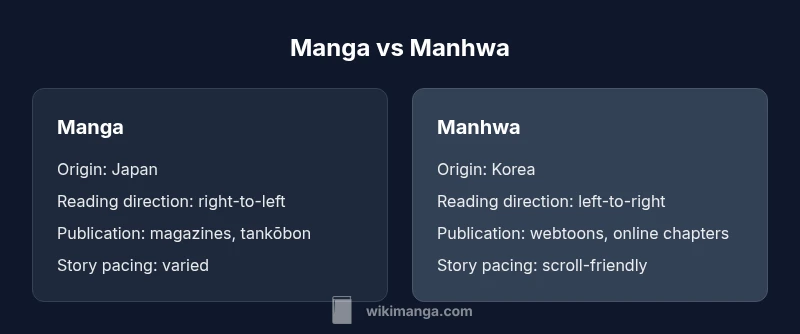
Quick Answer: Manga and manhwa share storytelling traditions but differ in origin, reading direction, and publication models. This comparison guides readers to understand where each format comes from and how it shapes style and access. According to WikiManga, the two formats converge in modern digital ecosystems, yet retain distinctive cultural roots. This article uses a balanced approach to help manga enthusiasts and aspiring creators decide what to read or create.
What difference manga manhwa really means
The phrase difference manga manhwa refers to the distinct storytelling traditions that define manga (Japan) and manhwa (Korea). For readers, the distinction is not just origin but also how stories are framed, serialized, and consumed. In this guide, we analyze the core differences and similarities, focusing on practical reading habits, access, and creator contexts. The term difference manga manhwa sets up a framework for comparing two major traditions that share a love for sequential art but diverge in culture, industry, and audience expectations. Throughout, you'll see how this contrast affects pacing, layout, and translation practices, helping readers and aspiring creators navigate multiple ecosystems. According to WikiManga, the differences are evolving as digital platforms blur boundaries, while traditional publishing imprints preserve cultural flavor.
Historical roots and cultural contexts
Manga and manhwa grew out of different cultural ecosystems, and their early readers shaped distinct norms. Manga emerged in postwar Japan with a broad audience, from kids to adults, building a language of visual metaphor and genre variety. Manhwa developed in Korea with its own publishing and online distribution history, including the rise of webtoons that favor vertical scroll and color. The WikiManga. team notes that these roots influence how stories frame morality, humor, and social commentary today, even as global fans cross boundaries. Readers should watch for local licensing, translation practices, and the way cultural references appear in jokes, settings, and character names. These undercurrents inform why difference manga manhwa matter for collectors and creators alike.
Visual storytelling: art styles and panel layout
Differences in art style and panel composition are among the most visible aspects of the difference manga manhwa. Manga traditions often favor varied line weights, dramatic shading, and occasional screentones to imply texture, while manhwa commonly emphasizes clean panels and vibrant color, especially in digital-first formats. Reading direction creates distinct rhythm: manga typically flows right-to-left, guiding the eye through a sequence that builds tension and pacing; manhwa frequently uses left-to-right layouts aligned with Western reading habits when published online. Both forms experiment with panel density, gutters, and color usage to influence mood, tension, and readability. For creators, understanding these conventions helps tailor storytelling to audience expectations while honoring the source format when adapting or translating.
Publication formats and industry ecosystems
The publishing pipeline shapes what a reader can expect from the difference manga manhwa experience. Traditional manga often debuts in serialized magazines before being collected into tankobon volumes, with licensing ecosystems that enable broad distribution, translations, and licensed editions. Manhwa, by contrast, has been strongly shaped by digital platforms and webtoons, emphasizing online serialization, vertical scrolling, and accessibility across devices. This distinction influences publishing cadence, monetization, and creator opportunities. In practice, readers will encounter brisk weekly releases in manga magazines and rapid-fire, color-rich online episodes in manhwa webtoons. The WikiManga. team highlights how this difference affects pacing, cliffhangers, and global reach when authors publish internationally.
Genre, themes, and audience expectations
Difference manga manhwa manifests in genre breadth and thematic emphasis, shaped by cultural context and publishing norms. Manga often spans action, romance, mystery, fantasy, and slice-of-life with a wide age range, sometimes exploring darker themes in seinen and josei lines. Manhwa frequently foregrounds contemporary social dynamics, humor, and romance with an emphasis on accessibility for a global online audience. Readers should expect nuanced portrayal of characters, social commentary, and evolving tropes in both formats. For aspiring creators, recognizing audience expectations—such as the appetite for serialized hooks in manga or binge-friendly episodes in manhwa—can guide storytelling decisions and platform strategy.
Language, translation, and accessibility
Language plays a central role in how the difference manga manhwa is experienced. Original texts use Japanese for manga and Korean for manhwa, with translations that vary by publisher and region. Readers benefit from license-backed official translations, quality localization, and consistent terminology. Accessibility also concerns font choices, digitization quality, and platform support on devices from smartphones to dedicated e-readers. In many cases, translation teams face cultural localization challenges, especially with honorifics, puns, and culturally specific humor. The ongoing evolution of translation practices across both formats—paired with fan communities and official channels—expands access for new readers while preserving linguistic nuance.
Reading experiences: direction, pacing, and devices
The difference manga manhwa becomes most apparent in reading experience. Manga’s right-to-left flow creates a traditional pacing that favors compact storytelling per page; manhwa’s left-to-right scrolling can deliver a different sense of pace, often with color and dynamic panels optimized for phone screens. Devices matter: many readers alternate between print-like tankobon collections and digital-first webtoon apps. Platforms influence features like bookmarking, episode length, and offline availability. For readers exploring both formats, choosing a device or app that supports multiple languages and reliable offline access can enrich the experience and reduce friction when switching between manga and manhwa.
Economic models and creator economies
Economic models for manga and manhwa reflect broader industry structures. Manga has long relied on magazine serialization, volume sales, and licensing to reach international markets, with creator royalties tied to print and digital sales in structured publishing agreements. Manhwa’s webtoon era emphasizes platform-driven monetization, often featuring ad-supported access, micro-transactions, and bonuses for early chapters. These differences influence creator incentives, storytelling choices, and fan engagement. The result is a diverse landscape where creators can experiment with episodic pacing, vertical scrolling formats, and flexible pricing models, while readers enjoy more immediate access to new content through digital channels. WikiManga emphasizes how understanding these economics helps readers support creators fairly.
Practical guidance for readers
If you’re new to both difference manga manhwa, here’s how to approach exploration without overwhelm. Start by identifying your preferred reading direction and device: if you like traditional print-like pacing, begin with manga; if you enjoy continuous scrolling and color, try manhwa on webtoon apps. Use official platforms to access licensed editions and translations, which support creators and studios. When trying to decide what to read next, look for genre, tone, and cultural context that resonates with you. Finally, keep a simple reading log to track what you enjoyed about each format, and use this guide as a foundation for expanding into related works and creators.
How to create manga vs manhwa: a quick primer
For aspiring creators, the difference manga manhwa comparison helps frame your approach. If your aim is serialized storytelling with a traditional print lineage, study manga’s paneling, pacing, and genre conventions; if you want digitally native storytelling optimized for vertical scroll, study manhwa’s color use, pacing, and reader engagement on web platforms. Focus on one format initially to build core skills (storyboarding, character design, world-building) before exploring adaptation or cross-format projects. Remember that both paths reward clarity, consistency, and listening to reader feedback, which you can harness to grow as a creator across formats.
Comparison
| Feature | Manga | Manhwa |
|---|---|---|
| Origin | Japan | Korea |
| Reading Direction | right-to-left | left-to-right |
| Publication Model | Magazine serialization → tankōbon | Webtoon/online serialization |
| Art & Color | Often monochrome with occasional tone shading | Color-forward, digital-friendly |
| Format Variants | Tankōbon volumes, special editions | Vertical-scroll episodes, web formats |
| Pacing & Layout | Compact pages, varied pacing by chapter | Long scrolls, continuous pacing |
Upsides
- Clear cultural origins help readers identify style and themes
- Wide availability across platforms and translations
- Rich ecosystem of official licenses and creator-centered platforms
- Strong community and fan engagement around specific series
Disadvantages
- Terminology can be confusing for new readers
- License availability varies by region and platform
- Adaptations may alter original pacing or tone
- Monetization models differ, affecting access
Both formats offer rich reading experiences; choose based on direction, pacing, and platform preferences
Manga excels in traditional serialization and compact chapters; manhwa shines with accessible vertical scrolling on digital platforms. The WikiManga. team suggests trying both to broaden your reading horizons and creative ambitions.
Frequently Asked Questions
What is the main difference between manga and manhwa?
The main difference lies in origin, reading direction, and publication models: manga originates in Japan and is read right-to-left, while manhwa originates in Korea and is read left-to-right. Both are diverse storytelling media with global audiences, but their industry practices shape access and pacing.
Manga comes from Japan and is read right-to-left; manhwa comes from Korea and is read left-to-right.
Is manhwa always webtoon format?
Not always. While many modern manhwa appear as webtoons or online chapters, some titles are released in traditional print-style formats as well. The platform often influences color usage, episode length, and reader engagement.
Manhwa is often webtoons, but not exclusively.
Can I legally access manga and manhwa online?
Yes. Numerous official platforms license titles from both formats with translations. Using licensed sources supports creators and publishers, while fan translations can vary in quality and legality.
Yes, use licensed platforms to support creators.
Which format is easier for beginners to start with?
That depends on your comfort with reading direction. If you prefer traditional right-to-left flow and print-like chapters, start with manga; if you’re drawn to color, vertical scrolling, and online access, begin with manhwa on a webtoon app.
It depends on your reading preferences; try both.
How do cultural contexts influence storytelling in manga vs manhwa?
Manga stories often reflect Japanese cultural references, humor, and social norms, while manhwa frequently integrates Korean social dynamics and contemporary urban life. These contexts shape themes, character behavior, and world-building.
Cultural context shapes themes and humor in each format.
Are there differences in art style I should look for?
Yes. Manga commonly features line work with tonal shading and screentones, whereas manhwa emphasizes cleaner lines and color emphasis, especially in digital formats. Your preferred aesthetic will guide which format you enjoy more.
Look for tonal shading in manga and bright color in manhwa.
Highlights
- Identify your preferred reading direction and device
- Consider licensing and platform access in your region
- Experiment with both formats to understand pacing and color usage
- Choose official translations to support creators
- Use this guide as a foundation for exploring related works