Manga or Comics: A Side-by-Side Comparison Guide
An analytical, side-by-side look at manga vs comics, covering reading directions, formats, distribution, and creator workflows to help readers and aspiring creators decide where to invest time and effort.


Manga or comics reflect two major traditions in sequential storytelling, each with unique formats, reading directions, and cultural contexts. In brief, manga often relies on serialized storytelling, right-to-left panels, and subtle cultural nuance, while Western comics emphasize page-driven pacing and diverse formats. This comparison helps readers decide where to invest time, tools, or publishing paths. According to WikiManga, understanding these differences matters for both readers and creators.
Why manga or comics matter for readers and creators
Reading manga or comics shapes how stories are told and enjoyed. For readers, the format informs pacing, immersion, and even social rituals around collecting and bingeing. For creators, the format determines workflow, collaboration, and distribution strategies. Since the topic intersects language, translation, art style, and publishing economics, choosing one path often leads to a different career trajectory or reading habit. In this article, we examine the core differences and practical implications so fans and aspiring creators can decide where to invest time, effort, and resources. The phrase manga or comics isn't just about labels—it signals distinct systems of production, readership cultures, and market dynamics. According to WikiManga, understanding these differences helps you maximize enjoyment and plan future projects with clarity. By the end, you'll have a framework to compare formats, and a sense of which path aligns with your goals.
Reading directions and panel layout: RTL vs LTR
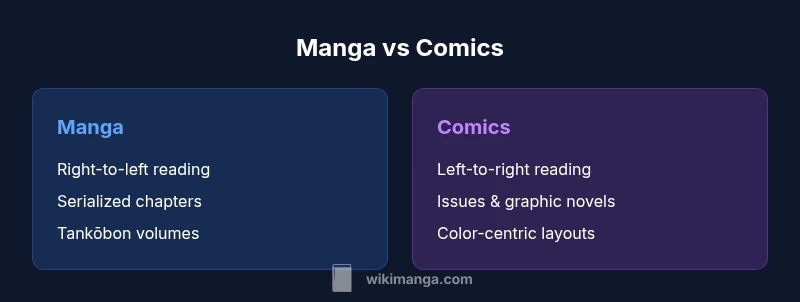
The core reading direction sets the rhythm of a story. Manga traditionally reads from right to left, with panels guiding the eye upward and across for a cinematic feel. Western comics typically read left to right, using page-turn pacing and panel grids that emphasize immediate clarity. Some modern creators adopt hybrid approaches, especially in digital formats, but the core distinction remains a practical constraint on lettering, speech balloons, and reader expectations. For collectors, the physical book order can alter the first impression of a character's design or a major plot reveal. For readers using apps, the experience often adapts to your device, preserving the original direction while offering zoom and pan features. Understanding direction helps you evaluate editions, translations, and reading comfort across languages.
Formats and structures: serialized manga vs issue-based comics
Manga tends to publish in serialized chapters within magazines, later collected into tankōbon volumes. This model favors long-running arcs, continuous character development, and fan engagement between chapters. Comics in the Western tradition often appear first as individual issues, with occasional crossovers and annual events; these issues then accumulate into collected editions or graphic novels. The episodic release can support short, self-contained stories alongside longer arcs. For creators, serialization imposes deadlines and production pipelines that require consistent staff and consistent art direction; for readers, it creates routines and anticipation around new chapters or issues. Digital platforms released in the 2010s accelerated this cadence, enabling readers to catch up quickly and discover back catalogs. The choice of format influences pacing, cliffhangers, and the balance between exposition and action.
Artistic style and cultural context
Artistic style in manga often emphasizes expressive faces, dynamic motion lines, and panel economy; cultural context shapes symbolism, humor, and tone. Comics from North America and Europe exhibit wide stylistic variance—from photorealistic genres to abstract experiments—and often employ color as a central narrative tool. These differences reflect publishing norms, printing technology, and audience expectations. For creators, adapting to a different cultural idiom can be a creative challenge but also an opportunity to reach new audiences through cross-cultural collaborations. Global audiences value both consistency in character design and the ability to convey mood through composition, line weight, and color choices. In practice, many titles blend influences, and translation teams work to preserve nuance without overpowering the original intent.
Market dynamics and distribution channels
Pricing, distribution, and licensing shape how readers access manga or comics. Manga historically relied on sprawling magazine ecosystems and collectible volumes, with digital subscriptions expanding access worldwide. Comics often distribute through specialized shops, library programs, digital marketplaces, and direct-to-consumer platforms. Availability varies by region due to licensing and localization, which can impact price, edition quality, and translation fidelity. For aspiring publishers, the landscape suggests different revenue models: ongoing serialization in magazines and annual anthology sales versus single-issue bundles and graphic novels. Global platforms, streaming-style release schedules, and creator-owned series have shifted the economics of both formats, but access remains uneven in some markets. Readers should consider their preferred access model, whether they want instant back catalogs or steady, long-running releases.
Tools for creators: from script to page
Creating manga or comics typically begins with a script or outline, followed by thumbnail planning, penciling, inking, and lettering. Manga workflows often rely on assistants and a tight production pipeline to meet weekly or monthly deadlines, with a strong emphasis on visual readability in small frame sizes. Comics workflows vary by studio, with colorists and letterers commonly joining the process. Digital tools such as drawing tablets, fonts, and storytelling software streamline work, while traditional techniques still hold value for texture and line work. For beginners, building a small portfolio, practicing panel composition, and studying master pages is essential. For aspiring creators, familiarizing yourself with project management, version control, and collaboration platforms reduces bottlenecks and improves consistency across chapters.
Reader experience: pacing, cliffhangers, and art vs text
Readers experience manga or comics through a mix of visuals, dialogue, and pacing decisions. Manga’s long arcs reward long-term engagement, with deliberate cliffhangers that keep readers returning. Comics often balance immediate gratification with periodic reveals, especially in episodic formats; the reader may experience more varied tonality within a single volume. The balance between art and text also shifts across markets: some readers prefer dense art with little dialogue, while others favor more narration and on-page captions. Digital reading adds features like episode lists, progress meters, and search functions that influence how readers skim or savor each page. Understanding these dynamics helps creators craft pages that optimize retention, and helps readers curate their own schedules for consumption.
Localization, translation, and global reach
Localization goes beyond translating words; it involves adapting cultural references, humor, and idioms. manga translations often handle honorifics, cultural motifs, and right-to-left formatting in ways that preserve the original tone, while erroneous localization can mislead new readers. Comics in English-speaking markets are typically translated with attention to regional slang and idioms, but the breadth of languages across platforms means quality can vary. Global fans increasingly expect accurate, respectful localization and a broad catalog that includes both ongoing series and anthologies. Platforms that support fan communities and official translation programs contribute to sustainable world readership. For creators, localization represents both a challenge and an opportunity to grow their audience beyond language borders.
Longevity and libraries: archiving and accessibility
Preserving manga or comics for future generations requires robust archiving practices and accessible digital catalogs. Libraries and institutions increasingly curate bilingual or translated editions, while publishers pursue high-quality digital back catalogs. Accessibility concerns include alternative text for images, adjustable font sizes, and audio narration options. For readers, the ability to search, annotate, and download legally acquired content enhances long-term engagement. Creators who plan for reprint editions and translations should consider licensing terms that support future preservation and format migrations. In practice, thoughtful archiving ensures stories endure, while digital platforms offer convenience for modern readers.
Case studies: cross-cultural success stories
Several titles demonstrate how manga and comics travel across borders. A Japanese manga series may gain international fame through English translations and streaming deals, while a Western graphic novel may inspire fan translations and translation collaborations. Hybrid formats like webtoons or digital-first stories illustrate how creators experiment with format while reaching global audiences. These examples highlight that curiosity, quality storytelling, and accessible distribution are more crucial than origin. For readers and creators, studying these success patterns reveals paths to build audience and secure publishing opportunities.
Practical tips for choosing a path
If you are a reader deciding what to explore next, sample short arcs from both manga and comics to test your preferences for pacing, artwork, and cultural context. If you are a creator, start with a small project in a familiar style and gradually adapt to a second format to test market fit. Build a reading habit that includes back catalog exploration and active participation in fan communities. Use reputable platforms, respect licensing, and support creators by purchasing official editions. The choice between manga or comics is not binary; many readers enjoy both, and many creators work across borders.
Licensing, rights, and ethical consumption
Licensing terms determine how widely a story can be distributed, how revenue is shared, and what adaptations are allowed. Ethical consumption means supporting creators by buying official editions, fair-use fan translations where allowed, and engaging with licensed streaming or digital platforms. Both manga and comics benefit from transparent licensing, clear rights, and strong preservation efforts. For new readers, this means choosing sources with reputable publishers and avoiding piracy. For creators, understanding rights, contracts, and translation agreements helps protect their work while expanding international reach.
Comparison
| Feature | Manga | Comics |
|---|---|---|
| Reading direction | Right-to-left (Japanese-origin) | Left-to-right (Western-origin) |
| Serialization cadence | Weekly/monthly magazine cycles | Issues with trade editions |
| Common formats | Serialized magazines, tankōbon volumes | Ongoing issues, graphic novels, trade paperbacks |
| Artistic emphasis | Expressive faces, panel economy, motion lines | Varied panel economy, color-driven storytelling |
| Cultural context | Japanese publishing culture, subtle humor | North American/European publishing culture, diverse genres |
| Localization quality | Typically careful RTL adaptation | Varies; regional localization quality differs |
| Distribution channels | Print magazines, digital subs, back catalogs | Comic shops, digital platforms, libraries |
| Audience reach | Global with long-tail readership | Broad but regionally segmented audiences |
| Pricing model | Subscription to magazines; per-volume pricing | Per-issue pricing and graphic novels |
| Creator ecosystem | Mangaka-led workflows, assistants common | Studio-based pipelines with colorists and letterers |
Upsides
- Long-term engagement for dedicated readers
- Vast diversity of genres and cultural perspectives
- Strong global communities and fan ecosystems
- Multiple avenues for creators to publish and experiment
Disadvantages
- Licensing can limit access in some regions
- Serialization can lead to delayed gratification
- Localization quality varies across markets
- Market fragmentation can complicate discovery
Manga and comics each offer distinct strengths; the best choice depends on your goals
If you crave serial storytelling and cultural nuance, manga offers depth over time. If you prefer standalone stories or shorter arcs, comics provide direct, episodic access. Use both paths to expand your reading and creating horizons.
Frequently Asked Questions
What is the main difference between manga and comics?
The main difference lies in format, direction, and cultural context. Manga typically reads right-to-left with long-running arcs rooted in Japanese publishing, while comics usually read left-to-right and feature a broader range of formats and genres. Reading experience and production pipelines reflect these traditions.
Manga is usually right-to-left and serialized; comics are often left-to-right and vary a lot in format.
Is manga always serialized?
Most manga is serialized in magazines or digital platforms before collection, but some titles appear as standalone volumes. Serialization helps sustain readership, while collected editions give readers a complete arc in one package.
Most manga runs serially, but you’ll also see collected volumes that wrap up arcs.
Are there graphic novels in manga style?
Yes. Many titles blend manga aesthetics with stand-alone collection formats akin to graphic novels. These works often retain manga-like pacing and art while presenting a complete story in a single volume.
There are manga-influenced graphic novels that tell full stories in a single volume.
How do licensing and translations affect availability?
Licensing and translation agreements determine which markets get editions, how quickly they appear, and at what price. Regional licensing can delay releases and influence the accuracy of localization.
Licensing can affect how quickly you access titles and how accurately they’re translated.
Can readers enjoy both manga and comics?
Absolutely. Many readers enjoy both mediums for different reasons—manga for long-form storytelling and comics for varied formats and palettes. Exploring both can broaden taste and understanding of narrative techniques.
Yes—you can enjoy both. They offer different storytelling tools.
What formats exist for collecting manga and comics?
Manga is often collected in tankōbon volumes after magazine serialization. Comics may appear as single issues, trade paperbacks, or graphic novels. Digital formats usually mirror these structures with added back catalogs.
Manga uses volumes after serialization; comics mix issues and collected editions.
Highlights
- Identify your goal: serialization vs episodic reading
- Explore formats: magazines vs issues and trade paperbacks
- Consider translation and localization needs
- Engage with official editions to support creators
- Experiment across both formats to build versatility